Table of contents
- What is SAP?
- What tools does SAP offer?
- 1. ERP systems from SAP
- 2. Business-Intelligence software by SAP
- 3. CRM systems and tools for customer experiences from SAP
- 4. E-commerce platforms & shop systems from SAP
- 5. Marketing tools from SAP
- 6. Customer Identity & Access Management (CIAM)
- 7. HR software from SAP
- 8. Warehouse management systems from SAP
- 9. Data Warehouse & Governance software from SAP
- 10. Spend Management
- 11. Content Management Systems
- Integrations with SAP
- Additional services from SAP
22,000 partner companies worldwide and over 100 solutions for various business areas - the talk is of the software provider SAP. Initially called "System Analysis Program Development", the manufacturer started in 1972 in Baden-Württemberg with five founders. Today, SAP employs over 105,000 employees in 140 countries. The company can be found in North and South America, Europe, the Middle East, Africa and the Asia-Pacific region.
But what exactly does SAP do and what solutions are in the provider's portfolio? In this article we dive into the SAP software world! We show you the respective tools and to which categories they belong. In addition, you will find a list of the corresponding articles from our content hub.
What is SAP?
In short, SAP is a provider of business applications and software systems. These enable companies to optimize and automate their business processes. The solutions cover a wide range of areas from financial administration to production to customer service. The result? Already over 230 million cloud users are using SAP's software solutions.
SAP has numerous tools from different categories of the software landscape. In the areas of ERP systems, CRM, E-commerce and Business Intelligence, the provider offers several tools. Here you can find an overview of the tools listed on OMR Reviews. Furthermore, we list articles for you that can answer further questions.
2. Business Intelligence software |
|---|
|
|
3. CRM systems & tools for customer experiences |
|---|
|
|
|
4. E-commerce platforms & shop systems |
|---|
|
|
6. Customer Identity & Access Management (CIAM) |
|---|
|
8. Warehouse management systems |
|---|
|
9. Data warehouse & governance software |
|---|
|
|
11. Content management systems |
|---|
|
1. ERP systems from SAP
SAP S/4HANA
- On premises, Private Cloud (or hosted) and Public Cloud
- Applicable to any industry and size
– ERP system for any industry and size. Provides a digital transformation of all business areas as well as role-based user interfaces. The solution can be used in a public or private cloud or is available as on-premise software.
SAP Business One
- For SMEs
- Integrated BI
- Can be used as an on-premise or cloud solution and can be integrated with SAP-4HANA
– ERP system for small to medium-sized enterprises (SMEs).
The main functions can be divided into financial management, sales and customer management, purchasing and inventory control, analytics and reporting and industry-specific solutions.
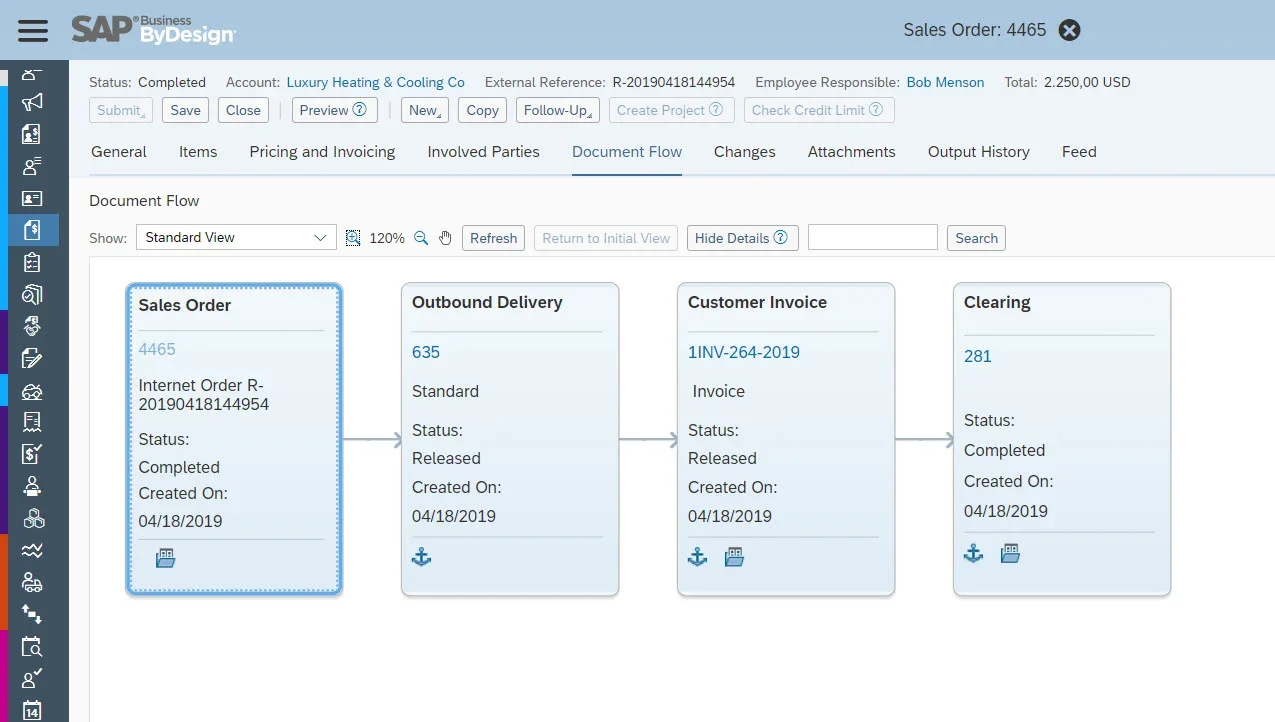
SAP Business ByDesign
- For managing medium-sized enterprises
- Offers current real-time analytics
– ERP system for managing medium-sized enterprises. A uniform cloud ERP solution with pre-configured company processes. This connects the different departments with each other and optimizes the workflow.
2. Business-Intelligence software by SAP
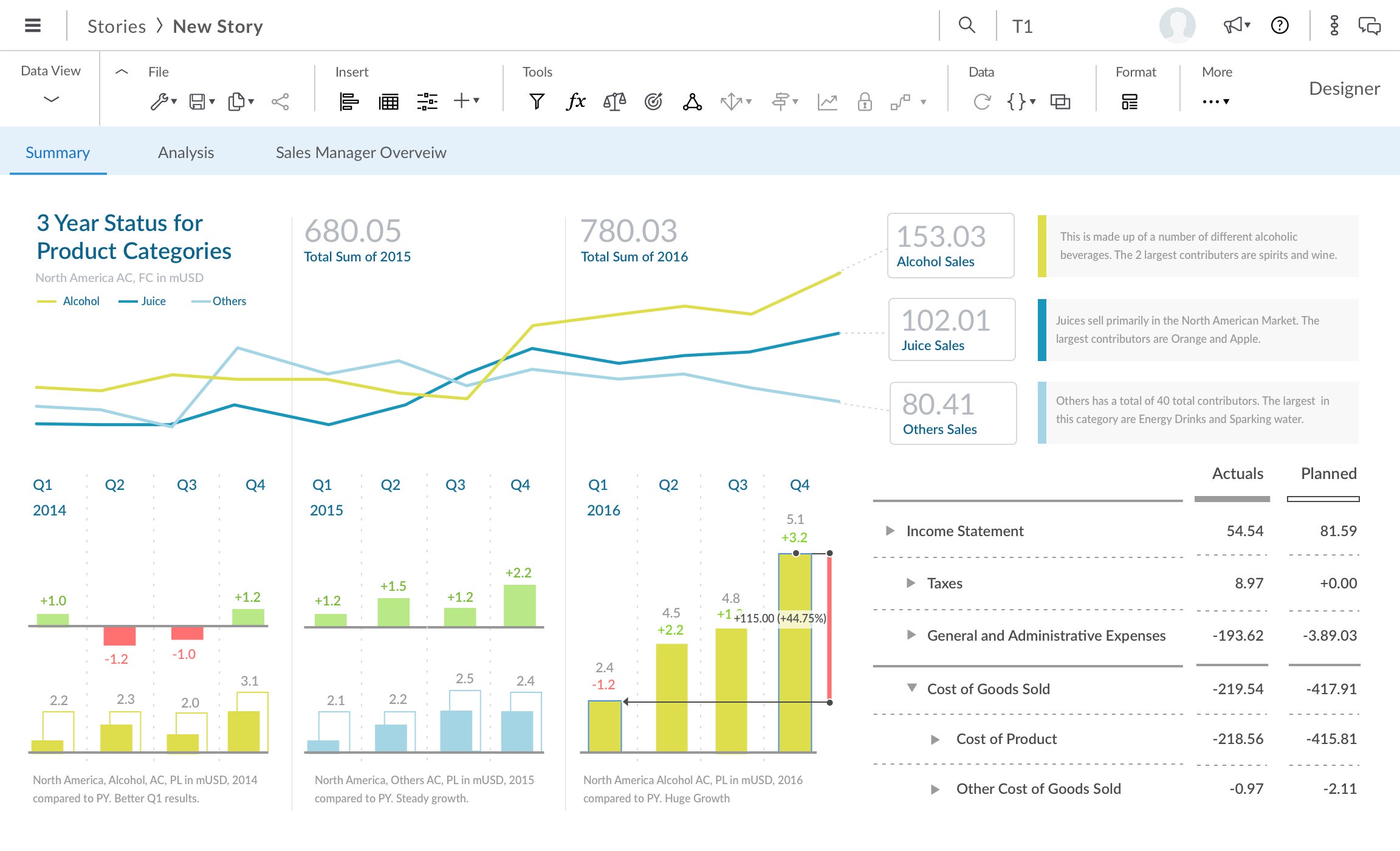
SAP Analytics Cloud
- Combines BI, advanced and predictive analytics as well as planning functions
- Enables to create and link financial and operational plans
SAP Analytics Cloudprovides access to all analysis functions with a uniform user experience, analyses company-wide data via self-service and makes the obtained insights available to users. In addition, with the tool, financial and operational plans can be seamlessly created and linked in one solution in order to make better decisions using integrated plans.
SAP BusinessObjects BI
- Creates reports from different data sources
- Connection to Microsoft Office
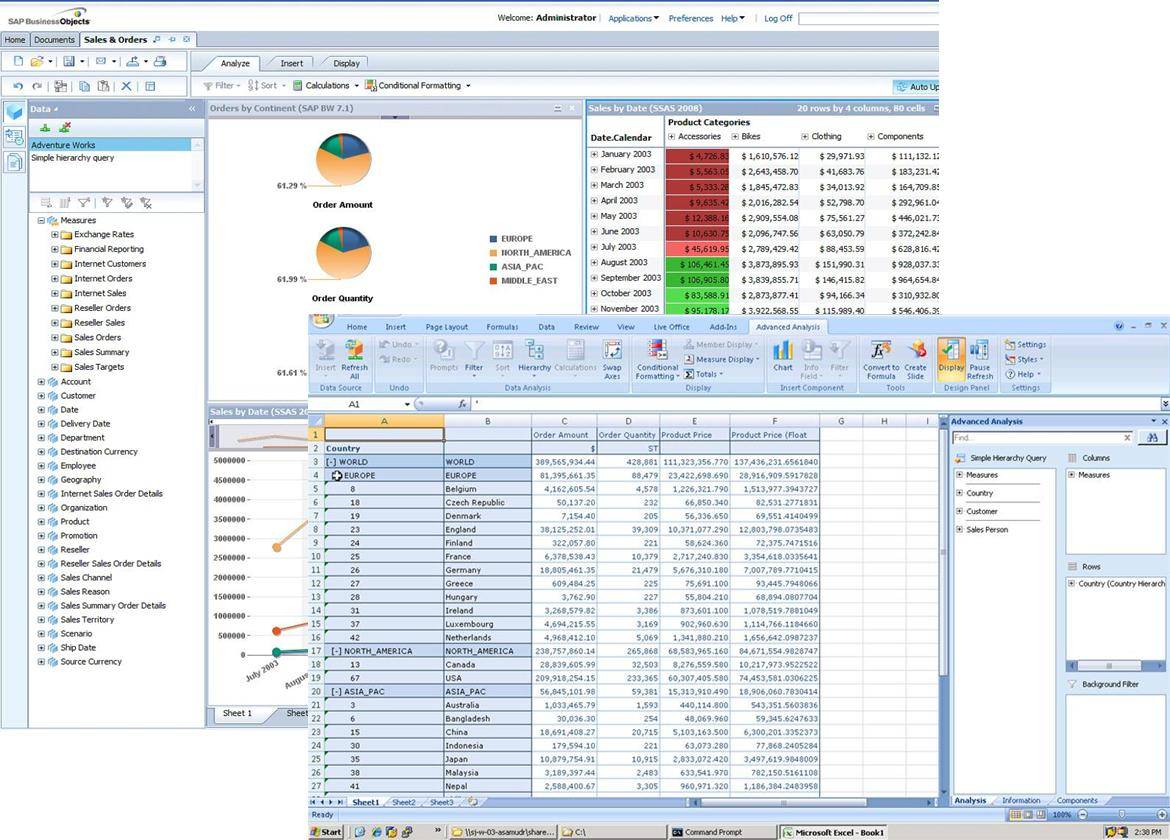
SAP BusinessObjects BI is a business intelligence solution, which simplifies the daily, central data analysis due to the simple operation and many functions. In addition, the tool offers a connection to Microsoft Office. This makes the tool interesting for companies that collect their data in Excel.
Relevant articles:
SAP CRM
- For every industry and company size
- Automated configuration of offers and contracts
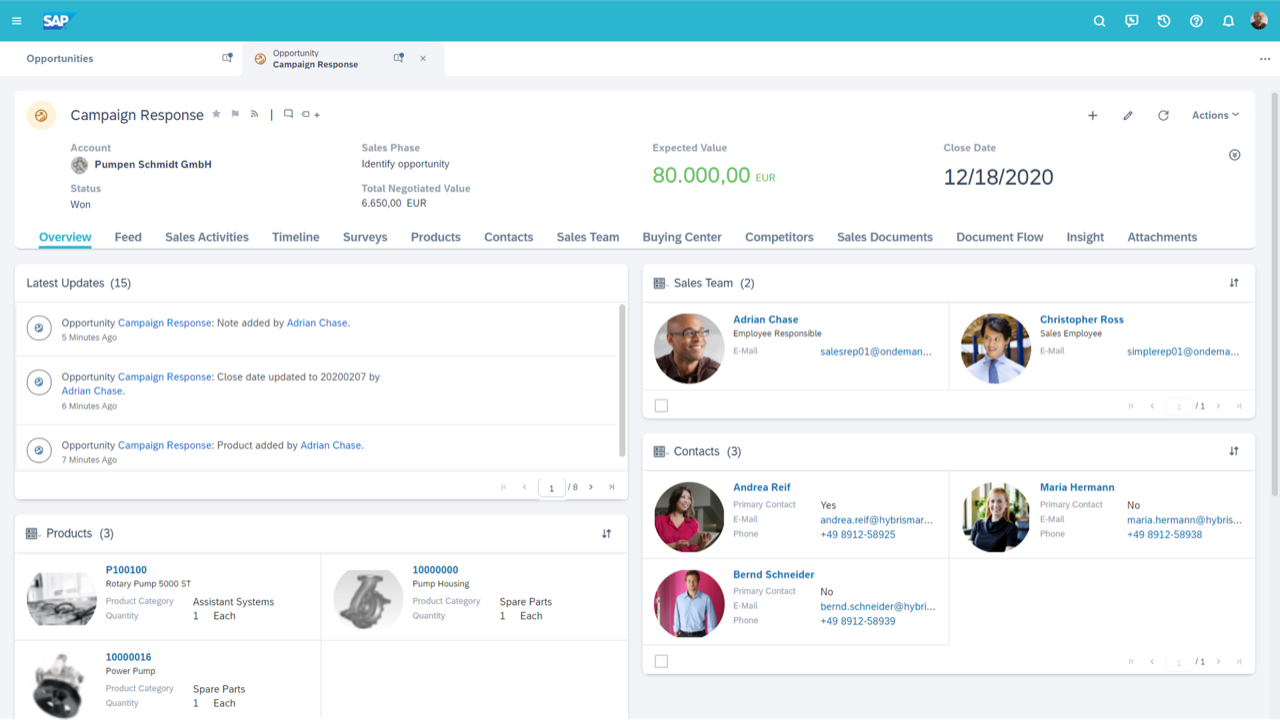
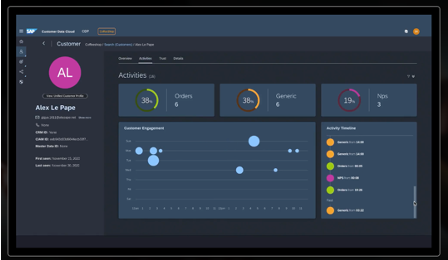
is suitable for companies that use this as a stand-alone, as well as for companies that already work with other SAP tools. It is also relevant for small and medium-sized enterprises. With the SAP Sales Cloud, users get a 360-degree view of their customers, can prioritize leads and opportunities, store customer data in one central location and increase sales productivity with collaboration tools, interactive dashboards and real-time customer analytics.
SAP Customer Data Platform
- Connects online and offline data
- Compliance with the DSGVO
With the
SAP Customer Data Platform companies gain insights about their customers, which they can use to create personalized experiences in real time for marketing, commerce, sales and service. The tool looks at online and offline data in order to better understand the end customers. Nevertheless, DSGVO-compliant use of data is prioritized.
SAP Enterprise Consent and Preference Management
- Consent management, as well as comprehensive self-service functions
- Compliance with the DSGVO
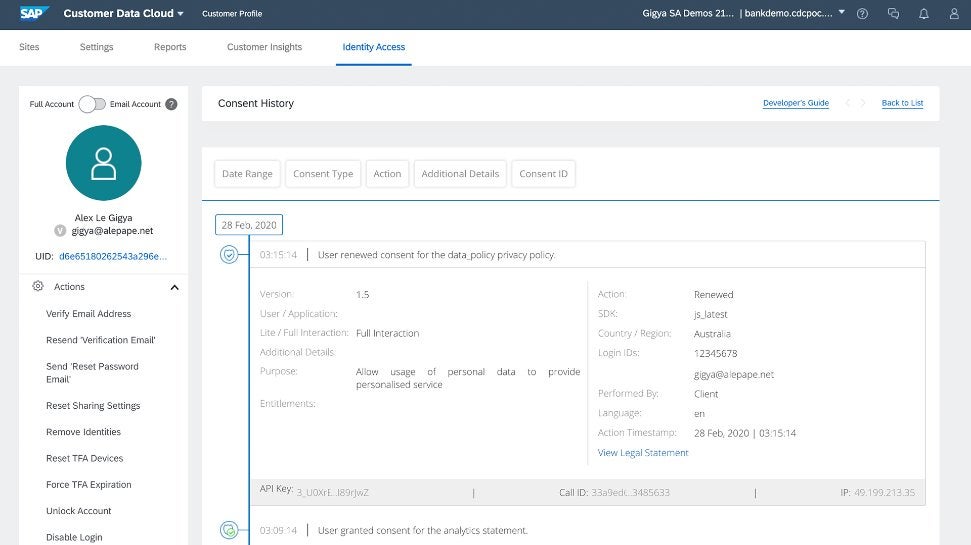
SAP Enterprise Consent and Preference Management serves to strengthen the trust of customers. This is achieved by providing customers with control over personal data through the tool. In addition, the DSGVO is constantly considered. Currently, the tool includes around 2.5 billion first-party profiles and over 5.5 billion consent data records.
Relevant articles:
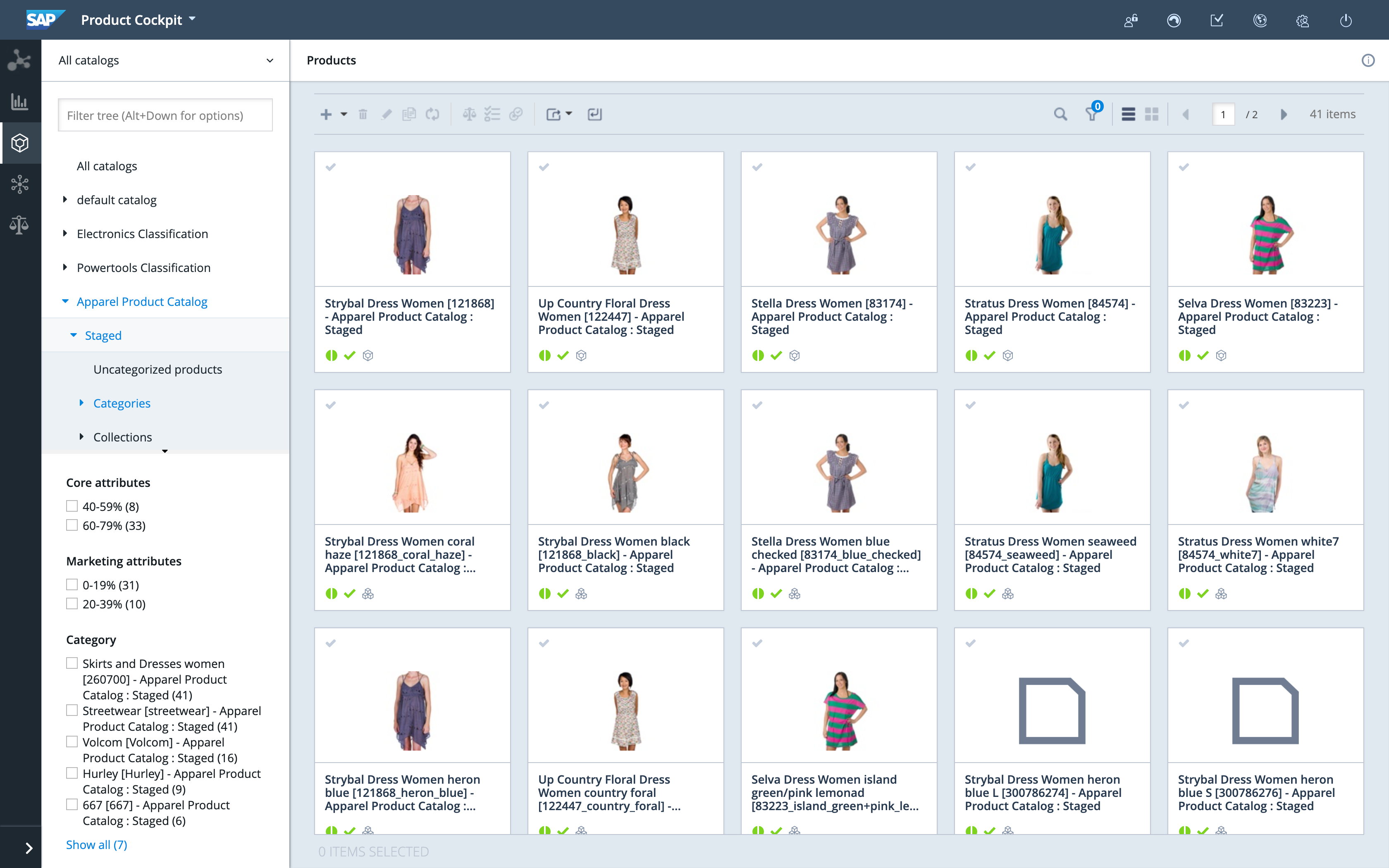
SAP Commerce Cloud
- For every company size
- Optimizes interactions and purchasing processes
- Personalized online shops for B2B and B2C companies
offers small, medium and large companies the opportunity to generate an omnichannel shopping experience. Functions based on customer needs and affinity are intended to increase customer satisfaction, conversion and order values. These include dashboards and the creation of personalized online shops. The systems can be used both stand-alone and in combination with other SAP solutions.
SAP Upscale Commerce
- SaaS for SMEs
- No major programming effort
SAP Upscale Commerce is designed to provide small and medium-sized enterprises with a software-as-a-service solution for e-commerce. With the tool, companies can introduce products without much programming effort, simplify purchasing processes or set up personalized online shops for all users. The systems can be used both stand-alone and in combination with other SAP solutions
. Relevant articles:
SAP Litmos
- Comprehensive reporting
- Integrated content creation
- No major programming effort
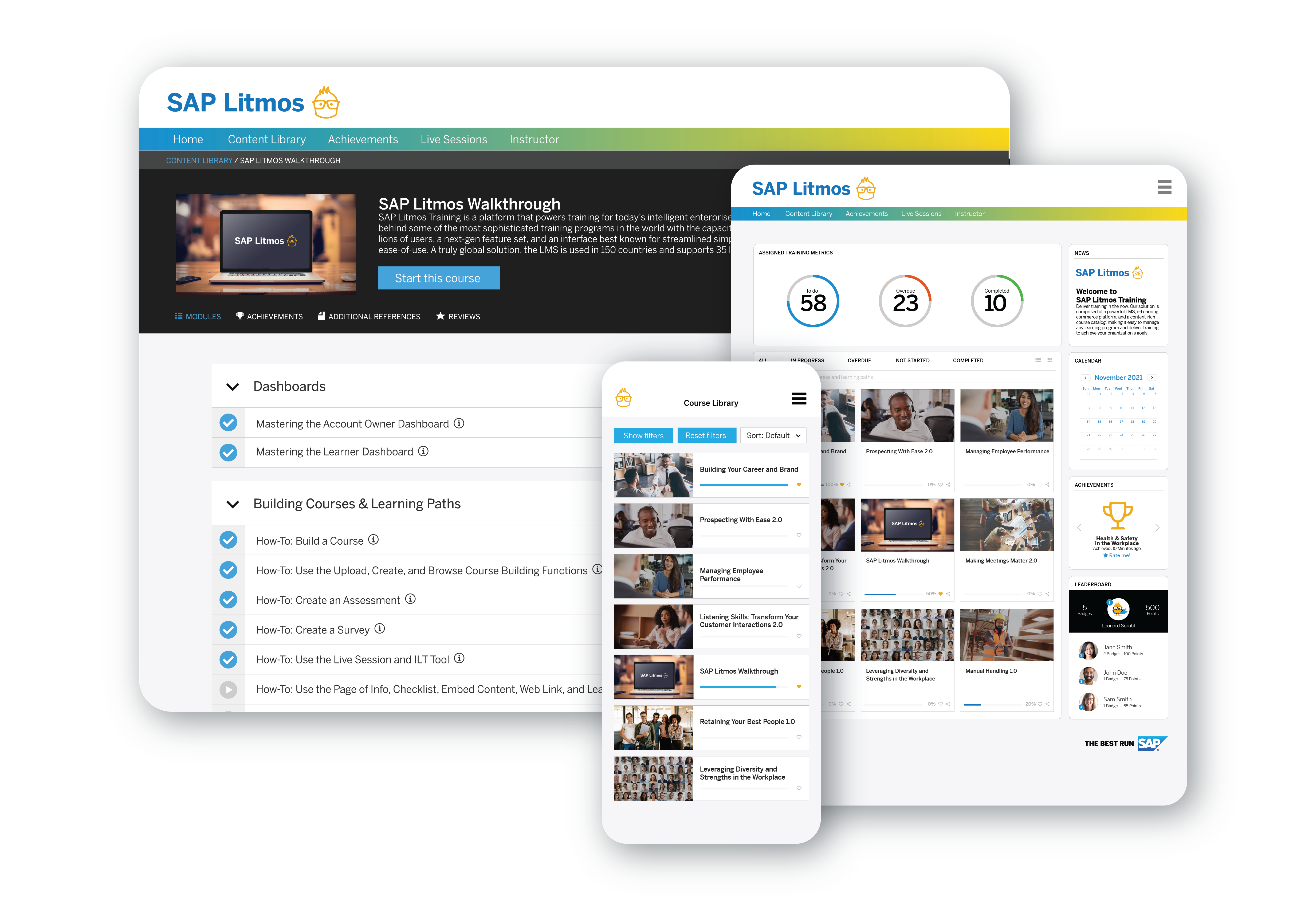
is a gamification software that was developed for various business areas. These areas include onboarding programs for sales teams, customer training, partner training and compliance solutions. The software offers features such as leaderboards, tracking and feedback as well as various system integrations. Users can also earn points and badges.
SAP Lumira
- Data visualization and analysis software
- Combines business intelligence in self-service and data visualizations with dashboards and analysis software
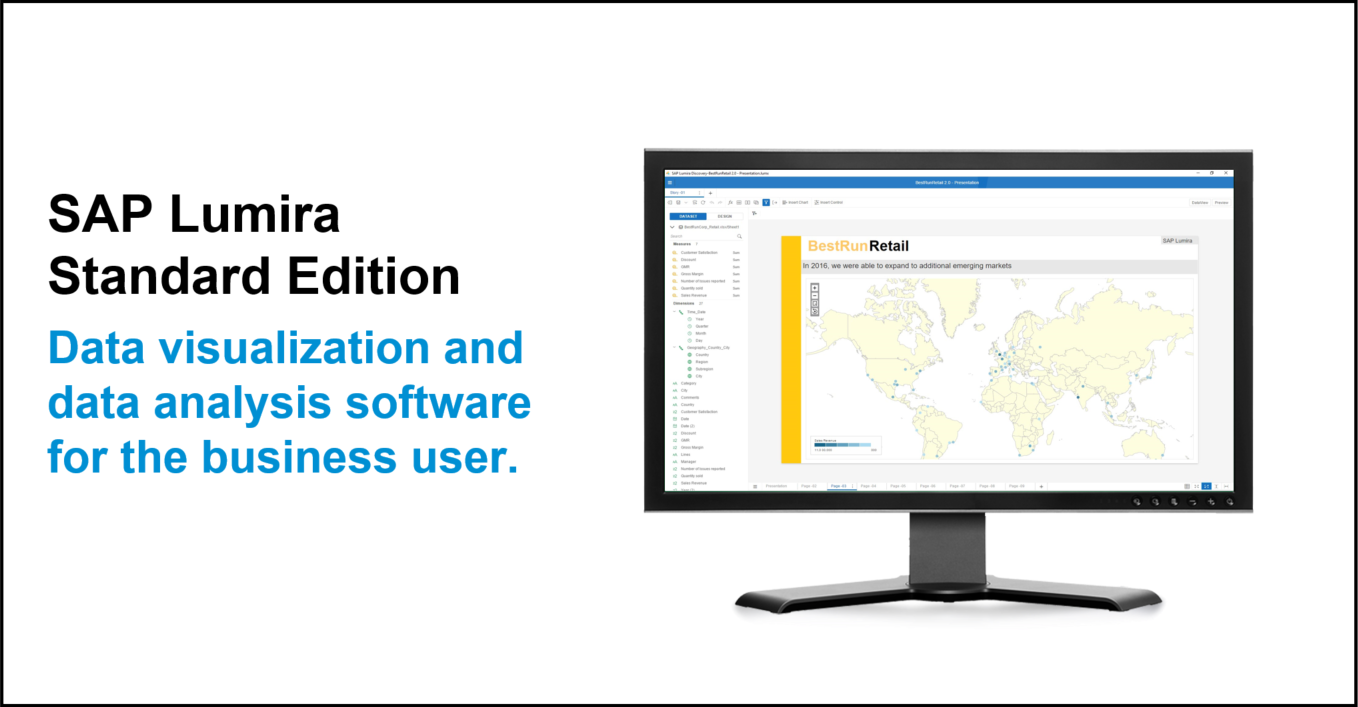
is a software for data visualization and analysis, which allows users to quickly and easily merge, evaluate and visually represent data from various SAP and non-SAP data sources. By combining self-service BI and data visualization with powerful analysis functions and interactive dashboards, SAP Lumira offers comprehensive possibilities for all user needs.
6. Customer Identity & Access Management (CIAM)
SAP Customer Identity and Access Management
- Relevant customer experiences based on first-party data
- Seamless customer onboarding
supports to shorten market launch times and simplify the lifecycle management of customer identities. The applicable data protection and compliance regulations are considered. The goal of the tool is to strengthen customer and partner relationships, accelerate business growth and reduce operating costs. Features include dynamic controls, access management, and single sign-on for multiple digital media.
7. HR software from SAP
SAP Success Factors
- Digital and mobile HR cloud solution
- Payroll
- HR analysis and personnel deployment planning
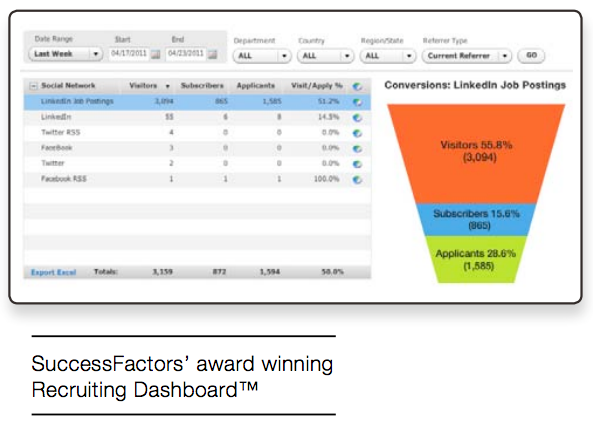
is a digital and mobile cloud solution for personnel management. If required, the software can be integrated into the existing SAP HCM system. With the numerous available modules, such as Recruiting Management, Onboarding, or Learning, Career and Development Management, the solution is especially suitable for medium-sized and large companies that want to digitally map their HR processes.
Relevant articles:
8. Warehouse management systems from SAP
SAP Extended Warehouse Management
- Complete integration into the SAP ERP system
- Use of AI and ML algorithms
is a software solution that supports companies in warehouse and distribution processes. With the tool, users can control automations of processes, the management of stocks as well as the monitoring and control of warehouse conditions. SAP EWM offers functions such as complete integration into the SAP ERP system, optimization of warehouse processes through the use of AI and ML algorithms, support of RFID technologies and a variety of analysis tools.
9. Data Warehouse & Governance software from SAP
SAP Data Warehouse Cloud
- Data warehousing service
- End-to-end warehouse in the cloud
- Offers cloud-based, cross-source service for business analysis and planning
SAP Data Warehouse Cloudmeets all common security standards and thus enables internal and external data to be brought together in a virtualized space. In addition to the software itself, the SAP Data Warehouse Cloud offers a business semantics service with multiple clouds and data sources for business analysis and planning. With this, data can be represented from an economic point of view.
SAP Master Data Architect
- Central hub for master data administration and governance
- Pre-configured data models, business rules, workflows and user interfaces
SAP Master Data Architectallows companies to optimize their workflows and make more informed decisions. By consolidating and centrally managing master data using SAP Master Data Governance, the application enables a consistent and reliable view of the company. This is achieved by using a master data management layer that is based on the SAP Business Technology Platform. With this solution, companies can consolidate their master data, implement a central governance and analyze the quality and processes of their data.
10. Spend Management
SAP Concur
- Submit expenses at any time
- Expense management for small and medium-sized enterprises
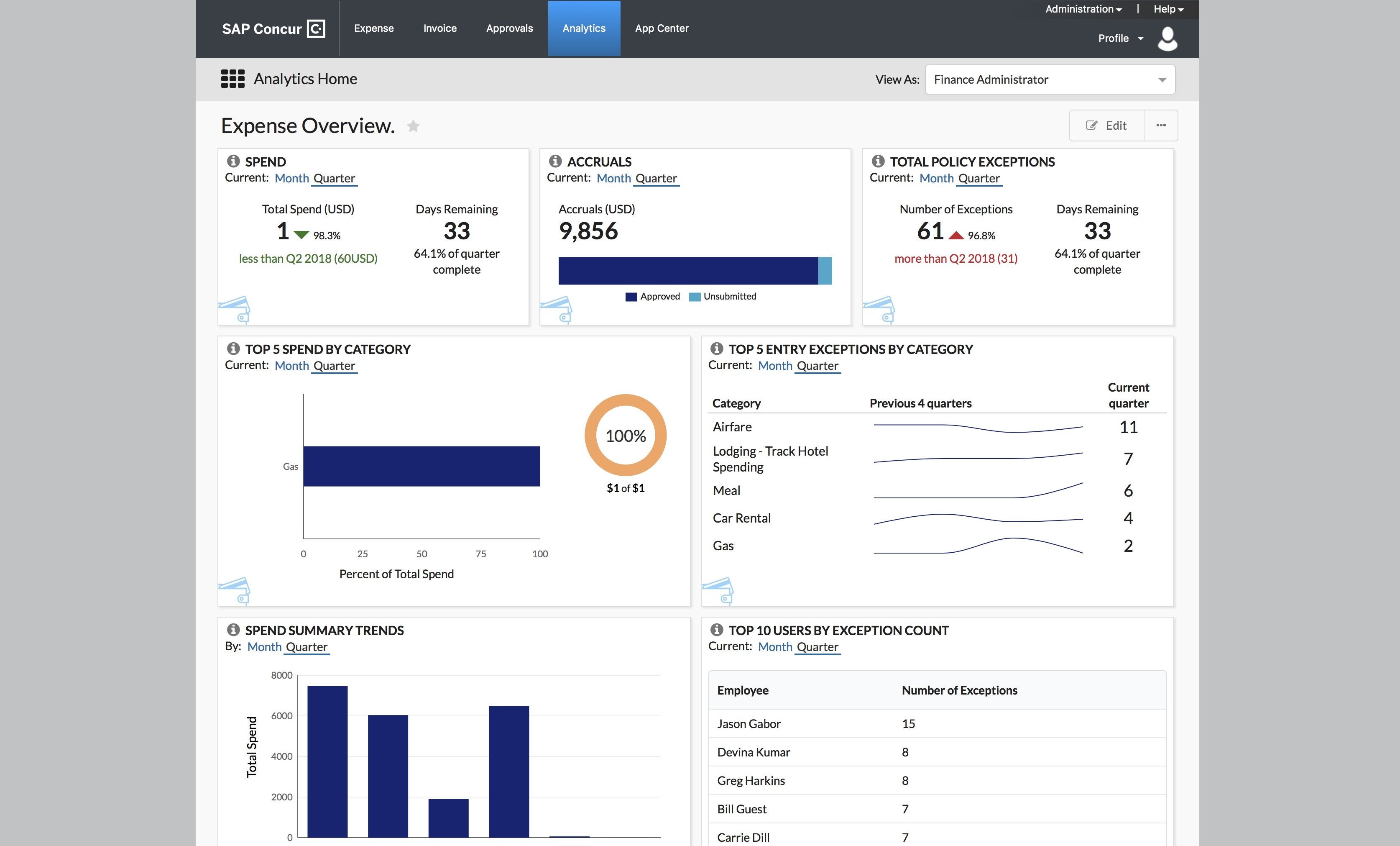
helps its users to automate and manage the expense processes in their companies. SAP Concur includes features such as Concur Expense, Concur Travel and specific Concur solutions for small and medium-sized enterprises. In addition, the tool can be integrated with DATEV. A demo version and further price information can be requested via the provider's website.
SAP Ariba
- Manage the entire purchasing process
- Expense optimization
SAP Ariba is a cloud-based software solution for expense management. With the tool, users can completely digitize their processes. The software is aimed at medium-sized and growing companies. Functions include contract attachments, approval procedures, notifications and reminders, a contract database as well as reportings & dashboards.
Relevant articles:
11. Content Management Systems
SAP Extended Enterprise Content Management by OpenText
- On-premise and private cloud operating model
- Content-related workflow
- Company-wide archiving and document capture
offers document and file management, search for information and collaborative editing of documents. Emails, documents and other content are integrated into the core business processes. It enables content-related workflows and process-oriented collaboration. Users can access business documents from anywhere and integrate them from third-party systems.
Integrations with SAP
All SAP tools are compatible with each other and can be supplemented. In addition, SAP offers its own
Integration Platform as a Service (iPaaS). With this you can publish and connect processes and integrate data throughout your landscape and value chain. In addition, SAP and Microsoft have been working closely together for a long time, which is why many integrations are possible between the two providers.
Additional services from SAP