Table of contents
- Why is it important to set relevant email marketing KPIs?
- In summary, it is crucial to define relevant KPIs in order to measure, monitor and optimize the success of your email marketing campaigns. This way, you can ensure that your campaigns are successful and achieve the desired results.
- Source: Bernard Marr
- What is a good open rate for newsletters?
- With which tools can the key figures be checked?
- Conclusion on Newsletter Key Figures
How do you know if your email marketing is successful? How do you know you're not one of the worst companies in email marketing? How can you prove you're not one of the worst? In this post, our guest author Idris Farjad will tell you everything you need to know about newsletter KPIs.
Recommended E-Mail-Marketing-Softwares
On our OMR Reviews comparison platform, you can find more recommended email marketing software.
We present over 150 solutions that are perfectly tailored to small and medium-sized companies, start-ups and large corporations. These softwares offer comprehensive support in all aspects of email marketing. Take this opportunity to compare the different email marketing tools, using real and verified user reviews:
Why is it important to set relevant email marketing KPIs?
The problem with email marketing is that anyone can send a campaign to their subscriber list, offering a 10% discount, generate some sales, and so be convinced they are mastering email marketing. There is a world of difference between the performance of amateur and outstanding email marketing.
To determine how good your email marketing is, you should evaluate your email marketing KPIs. Email marketing KPIs (Key Performance Indicators) are basically all the metrics that represent the performance of your emails. These metrics are necessary to track, evaluate and optimize the performance of your email marketing. Tools like
GetResponse can help with this.
Based on the metrics, you can draw conclusions about which elements of your email marketing are working well and which elements have potential for improvement. Additionally, you will be able to identify downward trends and problems in your email marketing early and act counter to them. By defining your relevant email marketing KPIs, you can measure your progress and identify aspects of your email marketing that still need improvement.
The definition of key email marketing KPIs is therefore essential.
- These are the four main reasons:Measurability:
- With relevant KPIs, you can measurably monitor the success and effectiveness of your email marketing campaigns. If KPIs such as the open or click rate fall or the unsubscribe or bounce rate increases, you can take steps to find the cause and stop the downward trend.Target Orientation:
- By defining targets and KPIs, you can plan and implement your campaigns with a target orientation.Optimization:
- Relevant KPIs enable you to monitor the progress of your campaign and adjust it to achieve better performance.Data-based Decisions:
KPIs provide important data that can help you make decisions on how to improve your email marketing campaigns.
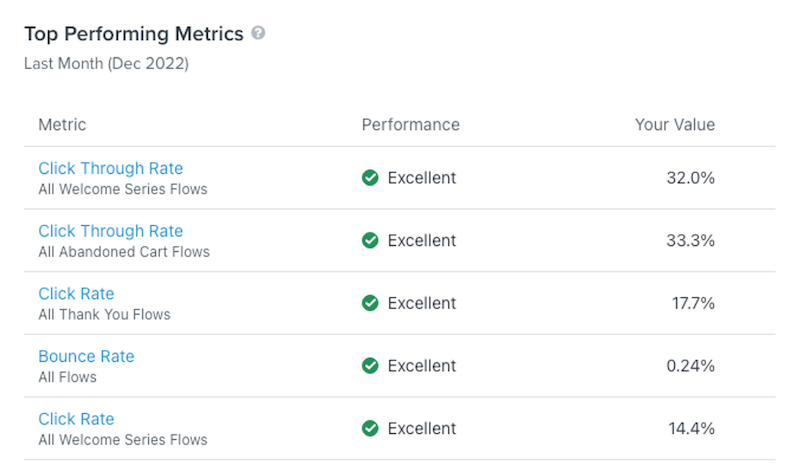
In summary, it is crucial to define relevant KPIs in order to measure, monitor and optimize the success of your email marketing campaigns. This way, you can ensure that your campaigns are successful and achieve the desired results.
How do the newsletter KPIs influence campaign success?
By tracking the relevant newsletter KPIs, you can see which aspects of your email marketing campaigns are working and which need to be improved.Examples:
If you have a low open rate, you can improve your subject lines to generate more interest. If your clickthrough rate is low, you can check if your call-to-action buttons are visible and the links are correctly set up.
Another important aspect of monitoring newsletter KPIs is comparability. Compare your current newsletter KPIs with previous campaigns to see if there are improvements or declines. Comparing with industry standards can also be helpful to see how you perform relative to other companies.

Source: Bernard Marr
The 10 most important newsletter KPIs and how they are calculated
- Many email marketers only consider 3 to 5 newsletter KPIs. However, in order to get a holistic view of their email marketing performance, the following 10 KPIs need to be considered.Open Rate This is how the open rate is calculated: Open Rate (%)
= Unique Opens: (Number of Recipients – Bounces) x 100*
The open rate indicates how many recipients of an email campaign have opened the email, in relation to the number of emails sent. This is an important indicator of how successful an email campaign is and provides information on how good the subject line is.
A higher open rate indicates that the email campaign is more successful and that the recipients are interested in the content. If the open rate is low, this may suggest that the subject line is not appealing enough or that the recipients list is not well segmented. There are many factors that can influence the open rate and it is important to keep an eye on them in order to achieve the highest possible visibility of your email marketing campaigns.Tip:
You should achieve open rates of more than 35%, thereby signaling to the email providers that your emails are interesting and relevant and therefore are being opened.Good to know: Due to the new Apple data privacy feature, Apple Mail automatically downloads external content from emails in the background. The evaluation always counts these emails as opened - regardless of whether recipients have actually opened them. Anyone who as an email marketer only uses the open rate to measure the performance of their campaigns is therefore working with inaccurate and distorted data. That's exactly why you should also consider the following newsletter KPIs when evaluating campaigns.
- Click Rate This is how the click rate is calculated: Click Rate (%)= Clicks: (Number of Recipients – Bounces) x 100*
The click rate, also known as CTR (Click-Through-Rate), indicates how many recipients of an email campaign have clicked on a link in the email, in relation to the number of emails sent. This is an important indicator of how successful the content and call to action in the email are.
A higher click rate indicates that the recipients are interested in the content and are responding to the call to action. If the click rate is low, this may suggest that the content is not relevant enough, that the call to action is not clear enough, or that the recipients list is not well segmented. There are many factors that can influence the click rate and it is important to keep an eye on them to achieve the best possible performance in email marketing campaigns.
- Total Sales: This is how total sales are calculated: Total Sales = Number of products or services sold x Sale Price
You can save yourself the calculation of total sales as most CRM systems already show you the total sales of your email campaign. The generated sales show how much money recipients have spent because of receiving and/or clicking on an email campaign.
This is an important indicator of how successful the email campaign was in terms of selling products or services. Higher sales suggest that the recipients are interested in the offers in the email and are willing to spend a higher amount of money. It is important to keep an eye on this indicator to evaluate and improve the effectiveness of email marketing campaigns and to determine the profitability of the campaign.
- Unsubscribe Rate: This is how the unsubscribe rate is calculated: Unsubscribe Rate (%)= Unsubscribes: (Number of Recipients - Bounces) * 100*
The unsubscribe rate indicates how many recipients have unsubscribed from an email list, in relation to the number of emails sent. This is an important indicator of how satisfied the recipients are with the content and frequency of the email campaigns.
A higher unsubscribe rate suggests that the recipients are dissatisfied with the content or frequency of the email campaigns and unsubscribe from the email list. It is important to keep an eye on this indicator to ensure that the content and frequency of the email campaigns are relevant and appealing to the recipients. A high unsubscribe rate damages the sender reputation and reduces the general deliverability and open rate of your emails.
- Spam Rate: The spam rate is calculated as follows: Spam Rate: (Number of spam markings: Number of recipients) x 100
The spam rate indicates how many emails were marked as spam by recipients, in relation to the number of emails sent. This is an important indicator of how well the email campaign is perceived by recipients as warranted and relevant.
A higher spam rate suggests that the recipients feel the email campaign is unwanted or irrelevant and mark it as spam. It is important to keep an eye on this indicator to ensure that the email campaigns are perceived by the recipients as wanted and relevant and to ensure the successful delivery of the emails. Otherwise, this may damage the sender reputation and reduce the general deliverability and open rate of your emails.
- Bounce Rate This is how the bounce rate is calculated: Bounce Rate (%)= Bounces: Number of Recipients * 100*
The bounce rate refers to the number of emails that could not be successfully delivered, in relation to the total number of emails sent. This can be due to various reasons, such as invalid email addresses, full mailboxes or problems with the recipient's email server.
Be sure to distinguish between Hard Bounces and Soft Bounces! While hard bounces cannot be delivered permanently, the users who experience soft bounces are only temporarily unreachable. This can occur, for example, when the recipient's mailbox is full. A higher bounce rate can indicate that the email list is not current or not well maintained and that there are delivery problems with the emails. It is important to keep an eye on this indicator and regularly check the email list to ensure that the emails are successfully delivered. Here too, the sender reputation can otherwise be damaged.
- Delivery Rate The delivery rate is calculated as follows:
Delivery Rate % = (Number of sent emails – Bounces) : Number of sent emails x 100
The delivery rate indicates how many emails could be successfully delivered, in relation to the total number of emails sent. It is an important indicator of how successful the email campaign is in terms of the delivery of the emails.
A higher delivery rate means that most emails are successfully delivered and that the email list is current and well maintained. It is important to keep an eye on this indicator to ensure successful delivery of emails and to ensure the email list is current and well maintained. This is exactly why inbox testing is recommended to find out with which email providers you are and with which you are not even delivered or even end up in the spam folder.
- Revenue per Recipient: This is how the revenue per recipient is calculated: Revenue per Recipient = Total sales from email: Number of recipients
Unlike sales, which gives the total amount of all recipients, revenue per recipient provides information about how much money the average recipient has spent as a result of receiving and/or clicking on your email campaign. This indicator is important to evaluate and improve the effectiveness of email marketing campaigns on an individual level. A higher revenue per recipient suggests that these recipients were particularly interested in the offers in the email and were willing to spend a higher amount of money. Therefore, it is important to also keep an eye on this indicator in order to determine the profitability of the email marketing campaign.
- Churn Rate: This is how the churn rate is calculated: Churn Rate % = (Customers at the beginning of the period x – Customers at the end of period x) : Number of customers at the beginning of the period x
The churn rate, also referred to as customer attrition rate, indicates how many customers a company loses. This is an important indicator of the health of an email marketing program as it provides insight on how satisfied the recipients are with the offer and whether they are still interested.
A high churn rate can indicate that the emails are not relevant enough, that they are sent too often, or that the recipients are no longer interested in the brand or product. It can also be due to deliverability issues or technical problems with the email marketing tool.
To reduce the churn rate, I recommend carefully segmenting receiver data and sending personalized content. The timing and frequency of email shipments should also be carefully planned to ensure that the emails are sent at the right time and at the right frequency to the recipients.
It is also important to monitor the data of the recipients to see who is unsubscribing or marking emails as spam in order to quickly identify and remedy these problems.
- Growth rate of your subscribers: This is how the growth rate of the newsletter list is calculated: Growth rate of your subscribers % = (new subscribers in period x – Unsubscribes + Hard Bounces + Spam Reports in period x) : Total number of subscribers x 100
The growth rate of your subscribers shows by how many percent the number of your newsletter subscribers has increased. Your aim should be to steadily win new subscribers for your
Newsletter and achieve an ever higher percentage growth rate. That is why it is important to look at the percentage growth rate of your subscribers.
What is a good open rate for newsletters?
In the email marketing industry, it is difficult to define an exact number for a good open rate as each industry and target group is different.
Sending emails to your entire newsletter list will result in low open rates and is not recommended. Because the low open rates lead to the email providers like Gmail, Hotmail and T-Online marking your emails as unimportant, irrelevant and advertising and as a result you will not end up in the inbox but in the spam. Inactive subscribers will typically not buy from you again, unless you have a big discount event.
A rule of thumb in email marketing is to achieve an open rate of over 30%. Due to the Apple Privacy Opens, emails that were not actually opened are marked as opened. Therefore, you should segment your list and try to achieve an open rate of over 35%. The segment could consist of people who are customers or subscribers and have opened at least one email from you in the past 150 days.
With an open rate of over 35%, you send positive signals to the email providers and ensure that your emails end up in the inbox and not in the spam folder.
Tip: Only sending an email campaign to your entire list makes sense when you have a big discount event or a sweepstakes. Discounts events or sweepstakes are a great way to reactivate inactive subscribers. If you host such an event and send an email campaign once every 3-6 months to your entire newsletter list, your sender reputation won't really be harmed.
One of the best ways is to use email marketing tools that allow you to monitor and analyze the various KPIs.
Numerous email marketing tools have already been reviewed on OMR Reviews. B2B companies usually rely on the tool of the market leader
Salesforce Sales Cloud. It's a CRM system that gives you a comprehensive overview of your customers and their behavior, including the open and click rates of your emails.
Another tool you might consider, popular among e-commerce companies, is
Klaviyo. This email marketing tool offers comprehensive analysis features that allow you to precisely track how participants respond to your email campaigns. You can monitor and analyze the open rate, the click rate and the conversion rate of your emails accurately. You can find more suitable
tools from the email marketing category in our software & tools comparison.
So, if you want to check your email marketing key figures, you should use an email marketing tool like ,
GetResponse that is tailored exactly to your needs. Choose a tool that provides you with the data and insights you need to optimize your email marketing campaigns and increase success.
With Salesforce and Klaviyo, you have two great options that can help you check and optimize your email marketing key figures. You can take advantage of both tools to achieve the best results for your email marketing campaigns.
In summary, monitoring and analyzing email marketing KPIs is crucial to understand and improve the performance of email campaigns. There are many different tools that companies can use to monitor and analyze these KPIs. With the right tools, companies can optimize their email marketing campaigns and achieve the best possible results.


