Table of contents
- This is important in Content Management in 2022
- These 5 mistakes should be avoided in Content Management
- It is particularly evident that over 30 percent have saved time in managing their content and projects by switching. Almost 20 percent of respondents have also noticed an increase in their website visitor numbers. The technical maintenance of their CMS has also decreased.
Did you know: Content Management Systems (CMS) have been around for over 25 years - and yet the trend for these software solutions is far from over. Quite the opposite: Apart from websites, many other channels have been added over time, through which customers want to interact with your company.
And you should keep this challenge in mind in
Content Management. What other trends have been added is shown by the recently published report "The State of Content Management". The headless CMS software
Storyblok has dealt in detail with the current trends in content management.
In this article, we will show you the most important findings and what mistakes you should no longer make in content management. These learnings will help you to examine your work with
Content Management Systems more closely, or to support you in choosing the right software.
This is important in Content Management in 2022
A total of nearly
CMS report by Storyblok almost 1,000 people from different expertise and industry sectors, including HR, product management and IT, were asked about their work in content management.
The survey found, among other things, that
around half of the respondents have so far used a traditional content management system. No wonder, with all the helpful
features that a CMS offers. However, there is also an increasing trend towards a Headless CMS, which offers more possibilities in the omnichannel area.
In addition, there is also a growing interest in driving the next generation of content experiences and offering customers new content formats across multiple channels in addition to the website.
Already
in the Storyblok interview with OMR Thomas Peham, VP of Marketing at Storyblok, emphasized that classic systems were designed for the web more than 20 years ago. Today, mobile apps and digital interfaces such as smartwatches are added, which can no longer be served by pure CMS.
By 2022 at the latest, you should take a look beyond the horizon of your content management. The Storyblok report shows how you can prepare for this new era of digital content creation.
Recommended Content Marketing Software
Recommendable content marketing software can be found on our software comparison platform OMR Reviews. There we have listed over 250 content marketing tools that support the creation and/or distribution of content on various channels and platforms. So take a look and compare the software with the help of authentic and verified user reviews:
These 5 mistakes should be avoided in Content Management
To ensure you are well equipped for the latest trends in content management, we now present the main findings from the Content Management report and the five mistakes you should avoid from now on.
1. Publish content on a website only
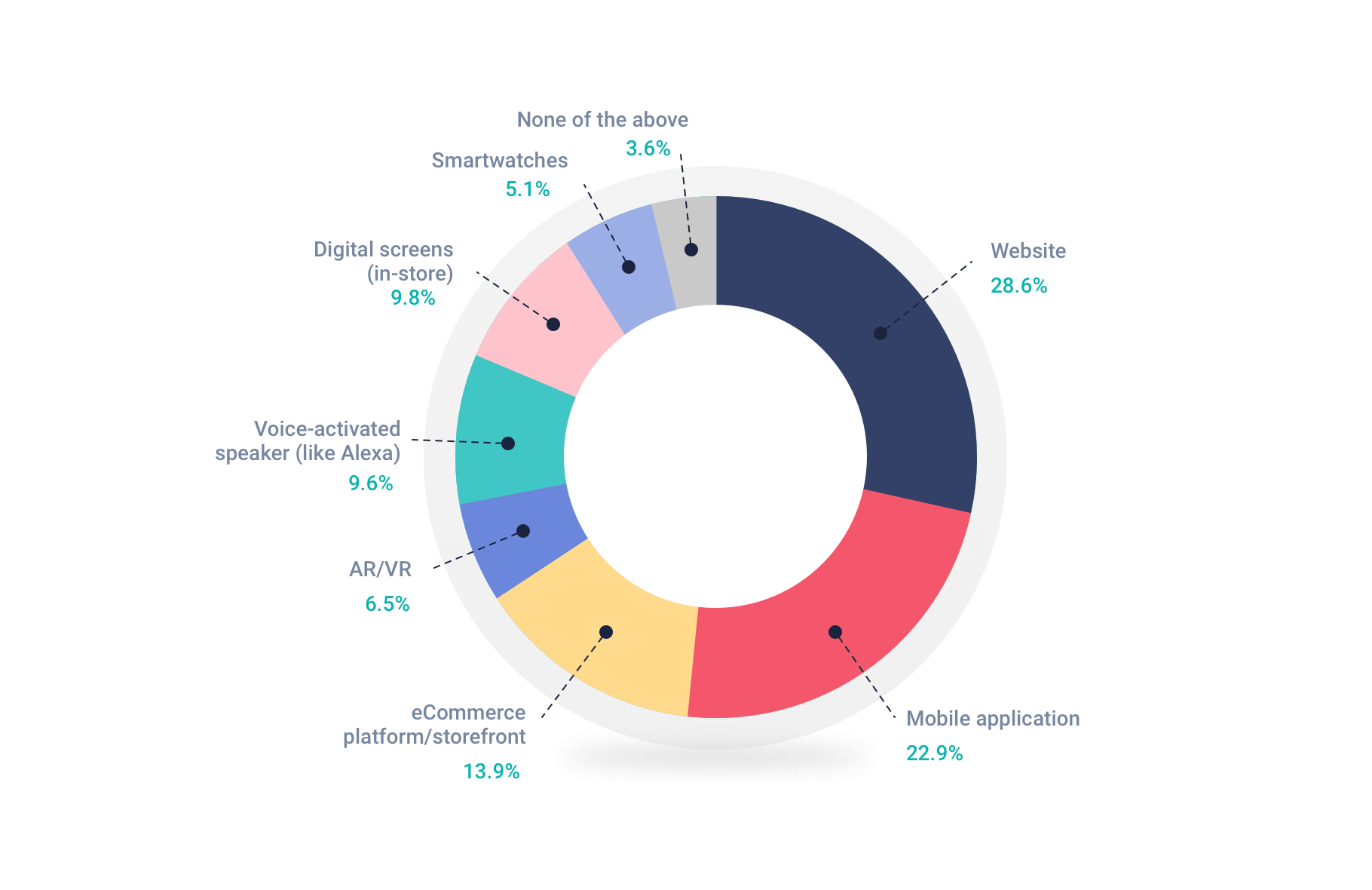
For the report, the approximately 1,000 participants from Storyblok were asked on which channels they share their content the most. The result was the leading platform Website with just under 40 percent, followed by mobile applications with 20 percent. Iot channels, like AR/VR or smartwatches, are currently used by less than 27 percent of respondents.
When it comes to which channels users would like to use more with a CMS in the future, the respondents also predominantly chose the channels websites and mobile applications. E-commerce platforms also see almost 14 percent as future-proof channels in content management.
Interest in AR or smartwatches is still low for the future, but awareness and openness for new channels is there.
Source: Storyblok
The results show that the trend is definitely towards much more channels that need to be filled with content. Even now, the high importance of mobile applications and the trend towards voice-controlled applications are apparent.
Try to avoid the mistake of playing out your content only on your website. Take a close look at whether other channels could play a role for you and your target group.
2. Not being informed about current trends in the market
.
Source: Storyblok
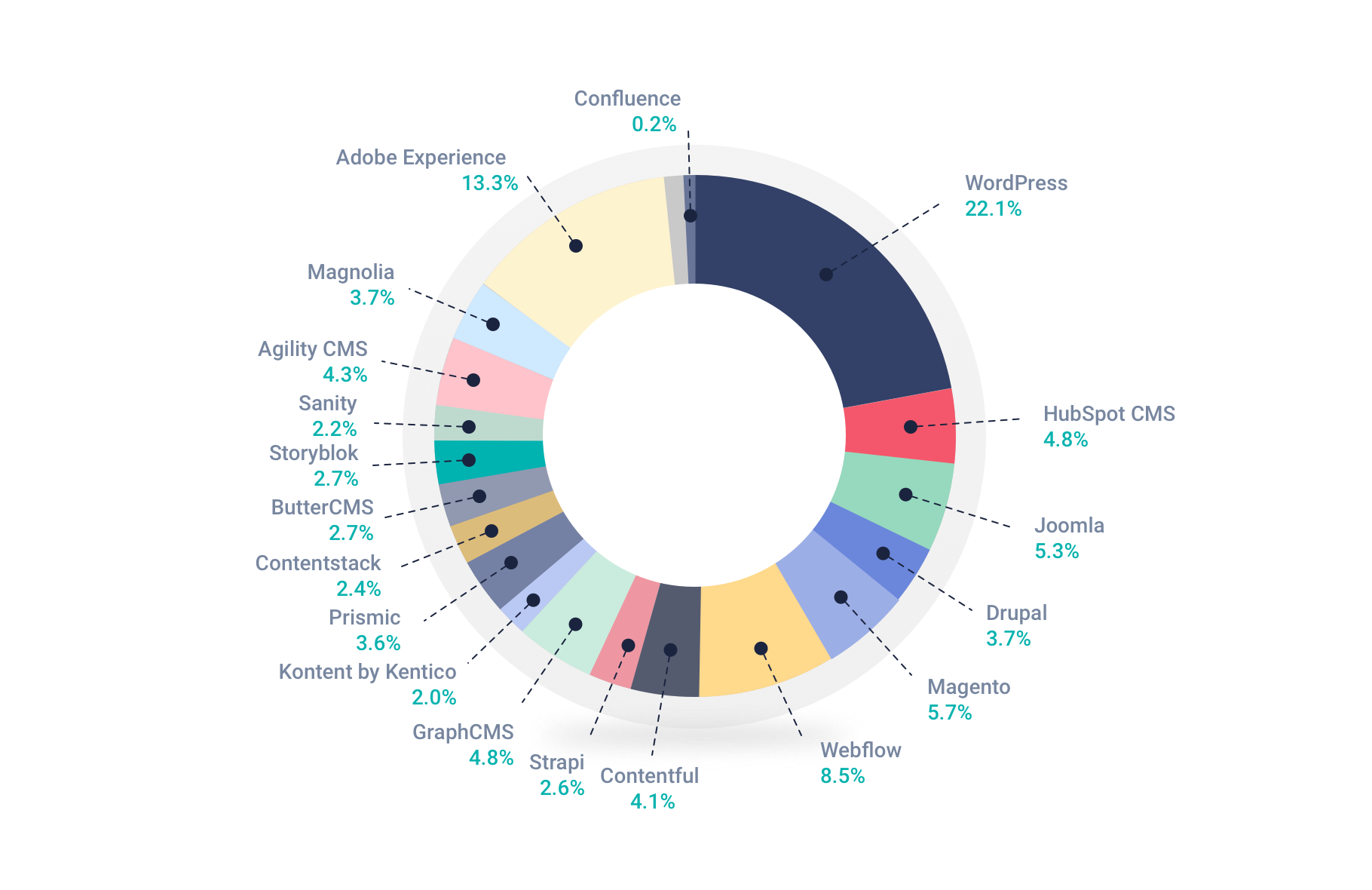
We describe exactly what makes these content management systems in the further course of this article. Basically, it's worth keeping an eye out for current content management trends and reviewing your current systems for these requirements.
3. Use more than one CMSIn the content management study, the participants were also asked how many content management systems they currently use. The usual number of companies surveyed was on average 1 to 3
, almost half use even 2 to 3 content management systems within an organization. In the same context, respondents were asked to explain why they use more than one content management system. The answers all point in a very clear direction: Most need several CMS to meet the requirements of new technologies and especially Omnichannel Publishing
.
The solution to the challenge could be so simple: Avoid using different content management systems as much as possible and focus instead on a system that covers all your different needs. It's worth investing more time in pre-selection than in using multiple CMS.
4. Ignoring Pain Points of the current solutionSwitching to a new CMS solution not only brings technical changes, but also completely new approaches to your content management. Even in the study, it becomes clear among the respondents that the overcoming of a change is still large
. Overall, about 33 percent of participants indicated that the time required
for them is the biggest pain point. Similarly, about 21 percent confirm that they repeatedly encounter technical difficulties. However, these should not be reasons for you to not switch a content management system. If your current software cannot meet the demands that you will need for your content management in the future, you should consider a change
.
The respect for a new system may be there, but you also get support from various software providers for integration into your company. Take these opportunities to put the migration into practice as practically as possible.
5. Be afraid of the migration to a headless systemMaybe the following results can take away your fear of migrating to a new CMS: Of the respondents, over 80 percent said that the switch to a headless CMS has brought many improvements in productivity and in meeting KPIs
and in growth.
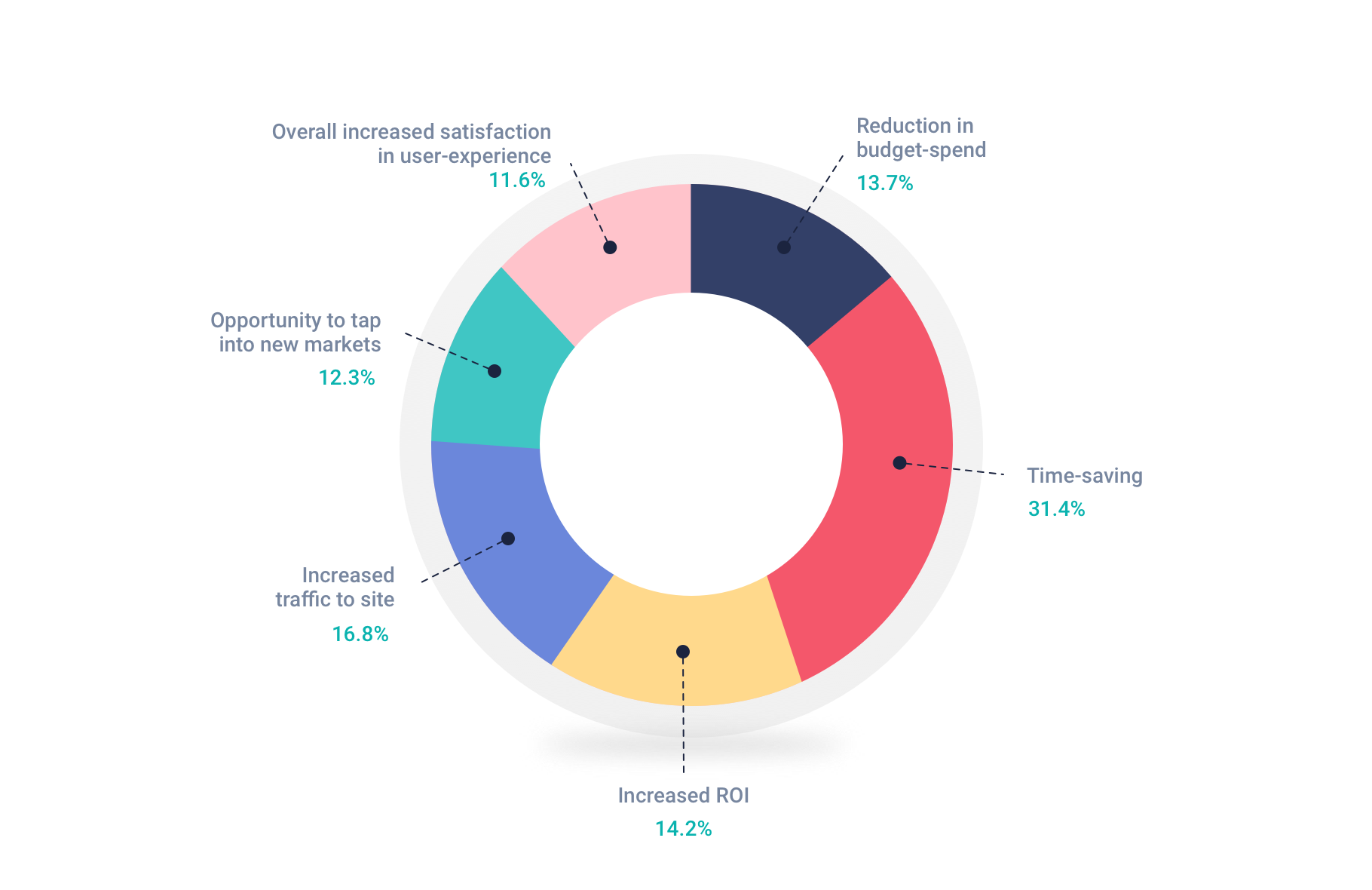
It is particularly evident that over 30 percent have saved time in managing their content and projects by switching. Almost 20 percent of respondents have also noticed an increase in their website visitor numbers. The technical maintenance of their CMS has also decreased.
What softwares can support you in headless content management
The reasons for new software to assist you in your future orientation in content management can be diverse. To give you an overview of what solutions are out there, we'll give you a closer look.
We only focus on the systems that give you the content management of multiple channels - the so-called Headless CMS. Also, we introduce you to the headless CMS Storyblok that conducted the study we presented above.
StoryblokStoryblok
is a globally leading headless content management system founded in 2017. As an API-first, Storyblok's features include a powerful visual editor
, which allows seamless use by marketing, developer, and content editor teams. The headless system removes the front-end component (the head) as it were and leaves the delivery of content to a RESTful AP and GraphQL. Storyblok gives your developers the freedom to build your preferred technologies into a website. So you can also integrate the tools that exactly meet your needs and requirements. In addition, no database setup or installation is required, as all cloud-based
.
Companies around the world and in many industries use Storyblok as their headless content management system of choice to create content and digital experiences for an omnichannel world, including Marc O'Polo, Happy Socks, Panini, Bols, Stronger, and Deliveroo.
Other Headless CMS on OMR Reviews
On our software review platform OMR Reviews we offer you other Headless CMS, which you can compare with each other according to reviews and ratings from other users.
Included are, among others, the following content management systems:
 Contentful
 Hygraph
 Magnolia
 ButterCMS


