Table of contents
- What is White Labeling?
- The Benefits of White Labeling for Your (Online) Business
- E-Commerce Without Production Effort? Here's What You Should Know
- The Right Partner for White Labeling in E-Commerce
- E-Commerce Success in Just a Few Clicks
You want to succeed with your own online shop without investing huge sums to include well-known brand products in your range? Then white labeling could be just the thing for you: with it, you brand ready-made products as your own and don’t need to worry about their development and production.
We’ll explain how white labeling works, what benefits it offers your business, and how to use it in e-commerce..
Recommended E-Commerce-Platforms & Shopsystems
On our comparison platform OMR Reviews you can find more recommended e-commerce platforms & store systems.
We present over 230 solutions that are specifically tailored to the needs of small and medium-sized companies, start-ups and large corporations. Our platform offers comprehensive support in all areas of online commerce, from product presentation to customer management. Take the opportunity to compare different e-commerce solutions, taking into account real user reviews, to find the perfect system for your individual business needs:
What is White Labeling?
A white label refers to products or services that are manufactured by one company but not sold under that manufacturer’s brand. The producing company hands over these items to another retailer—such as you—so you can sell them under your own label.
Typically, white-label products are offered in bulk with tiered pricing, making this distribution method worthwhile for the brand manufacturer. This practice is also referred to as B2B white labeling. In this case, your only responsibility is the marketing and sales of the already finished products.
White labeling exists in nearly every industry—from food and electronics to music, clothing, and software. However, don’t confuse it with what’s known as private labeling. The difference lies in the level of customization: private labeling involves a company selling a manufacturer’s product with customizations to the design, packaging, or even composition. Although the manufacturer still produces the product, the selling company has more control over its appearance and presentation. While this allows for greater personalization, it also tends to be more expensive and time-consuming..
The Benefits of White Labeling for Your (Online) Business
Why should you use white labeling for your business? After all, you could develop your own products or benefit from the reputation of big brands sold in your shop. However, buying ready-made unbranded products can be especially worthwhile because…
- You don’t need to invest in product development or manufacturing.
- You can quickly react to market trends – without long development cycles or extensive quality checks.
- You can build your brand and marketing efforts without dealing with production and logistics.
- You can expand your product range with minimal risk, ordering only as needed and avoiding large upfront payments.
- You benefit from the established quality standards of the manufacturer and can manage your inventory flexibly and efficiently.
- With services like dropshipping and print-on-demand (POD), you can even run your online store without a warehouse and still sell your own product designs.
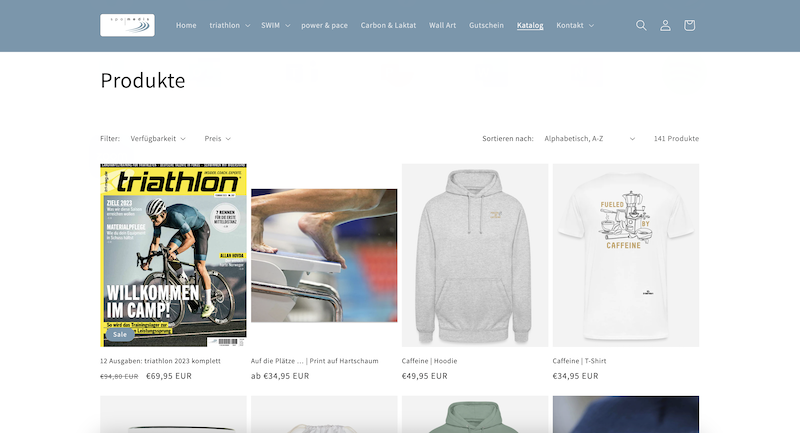
The print media company for sports topics,
spomedis, relies on customizable white label products for its triathlon, power & pace and SWIM merch brands. Image: Spreadconnect
E-Commerce Without Production Effort? Here's What You Should Know
Even though white labeling sounds simple, there are a few key points to consider—beyond just choosing the right products—for your online shop:
1. Choose the Right Manufacturer
Ensure the manufacturer delivers reliable, high-quality products. The quality of the product reflects directly on your business, so the manufacturer should meet your standards.
2. Look for Fair Pricing Structures
The price of the white-label product impacts your profit margin. Make sure you get products at a price that allows for a healthy margin while still appealing to your target audience.
3. Clarify Delivery Times and Availability
Set clear delivery schedules and stay in regular contact with the manufacturer. Production issues or delivery delays can harm your business, so plan adequate buffers.
4. Check Legal Requirements
Ensure that you don’t infringe on any trademark rights with white labeling. If you want to sell branded products, check if you have the rights to do so. Also, verify if there are specific license agreements or legal regulations to follow.
5. Design Your Brand
Even if the product is "white", don’t just slap on a logo. Present the product in a way that aligns with your brand identity. Packaging and design play a big role here.
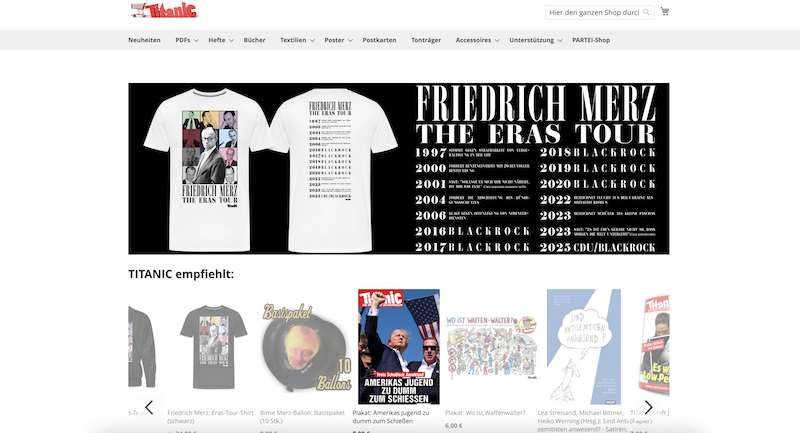
The satirical magazine
Titanic distributes its products with the help of white labeling, print-on-demand and dropshipping via Spreadconnect. This means that the magazine has no warehousing and shipping costs. Image: Spreadconnect
6. Communicate Transparently
Be open about the white-label nature of your products if necessary. Your customers should know that the items weren’t developed by you directly, but are still high-quality and reflect your brand.
7. Foster Long-Term Partnerships
White labeling often works best with long-term, trusted relationships with your suppliers. This allows for collaboration on quality and innovation.
8. Provide Reliable Support
Although you’re not the manufacturer, your customers will contact you with any issues. Make sure your customer service is dependable.
The Right Partner for White Labeling in E-Commerce
To succeed with white labeling in e-commerce, you need a manufacturer that fits your business model. You have various options for leveraging this approach. Depending on the provider, you can ship your white-label products via your own warehouse or use dropshipping or print-on-demand (POD) services.
To
benefit from dropshipping (no storage, packaging, or shipping responsibilities) or POD (products produced only after an order), software providers like
Spreadconnect handle the
entire production and shipping process. With white labeling in mind, you can brand
over 250 products—from t-shirts and mugs to plush toys—with your own design and sell them
through your online store. Spreadconnect takes care of order processing, production, and logistics.
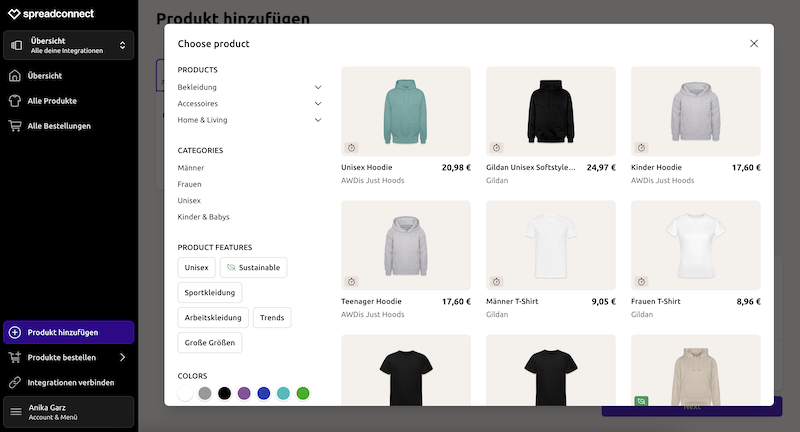
At Spreadconnect, you can choose from more than 250 white-label products for your online business. Image: Spreadconnect
To retain control over how your white-label products are marketed and presented, you can integrate Spreadconnect with
shop systems,
marketplaces, and social media platforms like:
With automatic synchronization to your online store, you can sell new products under your brand directly to customers. As soon as someone places an order via your website, Spreadconnect handles the printing and shipping. Thanks to print-on-demand, you incur no upfront costs—unlike with buying and storing other white-label products. When an item is purchased through Spreadconnect, the supplier bills you the product price. Your advantage: you set your own margin, as is typical with white labeling. You alone decide how much to mark up from the base price.
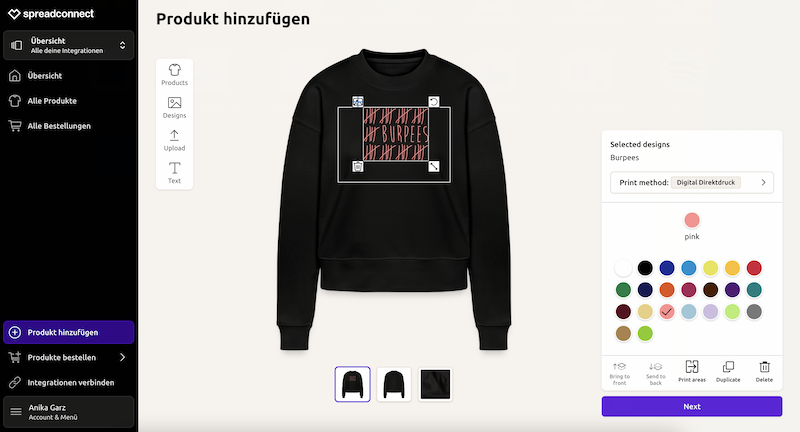
Customize Spreadconnect's white label products to your liking and create appealing designs and merch for your fans. Image: Spreadconnect
You benefit from Spreadconnect’s years of experience in production, logistics, and
merchandising, making it easy to
scale your online business and even get support for your marketing campaigns.
E-Commerce Success in Just a Few Clicks
White labeling can be a great solution for quickly establishing your business in the market. With no high upfront investments, you can hit the ground running. If you pair this with strong marketing and branding, white labeling’s benefits can enhance your brand and contribute significantly to your online shop’s success. You don’t always need to reinvent the wheel—sometimes it’s enough to simply give the product a new (brand) name.
