Table of contents
- What is a return portal?
- Which features should a self-service return portal bring?
- These advantages are offered by your own return portal
- This is how you implement a return portal for your online shop
- Conclusion: Through the return portal of VCE you increase customer satisfaction and sales
Not only since yesterday, online shops and e-commerce have been booming. Even beyond the turbulent advent time or the consumer-heavy weeks before Valentine's Day, many start-ups and medium-sized companies offer their products digitally on the net. Customers appreciate the fast, uncomplicated and practical online shopping - and the easy return, when an item is defective or inappropriate.
However, operators of online shops face the problem of returns management and the associated costs. The balancing act between simplifying a return and satisfying customers while striving to remain profitable at the same time proves to be particularly difficult. It would be best if there were no returns (return or complaint) at all. But especially in the fashion industry, returns are inevitable due to varying clothes sizes.
According to a study by the EHI (Euro Handelsinstitut) from summer 2023, there is an average return rate in the DACH region of 6 to 10 %, in the fashion sector even between 26 and 50 %. The cost per item averages € 5 to € 10, mainly due to a quality control of the goods. With a return portal, you can noticeably reduce these costs.
This article explains why you need a digital return management system and how you can keep the effort with the returns as small as possible. In addition, we present the software solutions that successfully support you in the implementation.
What is a return portal?
Imagine your customers send back all unsuitable goods from various orders individually and you want to keep an overview of this return chaos so that everyone gets their money back or replacement efficiently. This is simply impossible.
If your online shop is the main channel for your sales, a digital return management offers an effective and automated processing of all returns. Depending on whether a product is damaged or unusable or whether an item no longer appeals to your customers, you can coordinate complex fulfilment processes centrally.
Especially for start-ups and small to medium-sized online shops, a self-service return portal can simplify these processes. But also for specialist and wholesale platforms in the B2B or D2C sector, the steps after the purchase can be flexibly and scalable summarized.
Whenever the right of return is unclear or the return shipping is too cumbersome, this leads to
purchase cancellationson the part of webshop users. Therefore, the customer service for returns should be as simple and quick as possible.
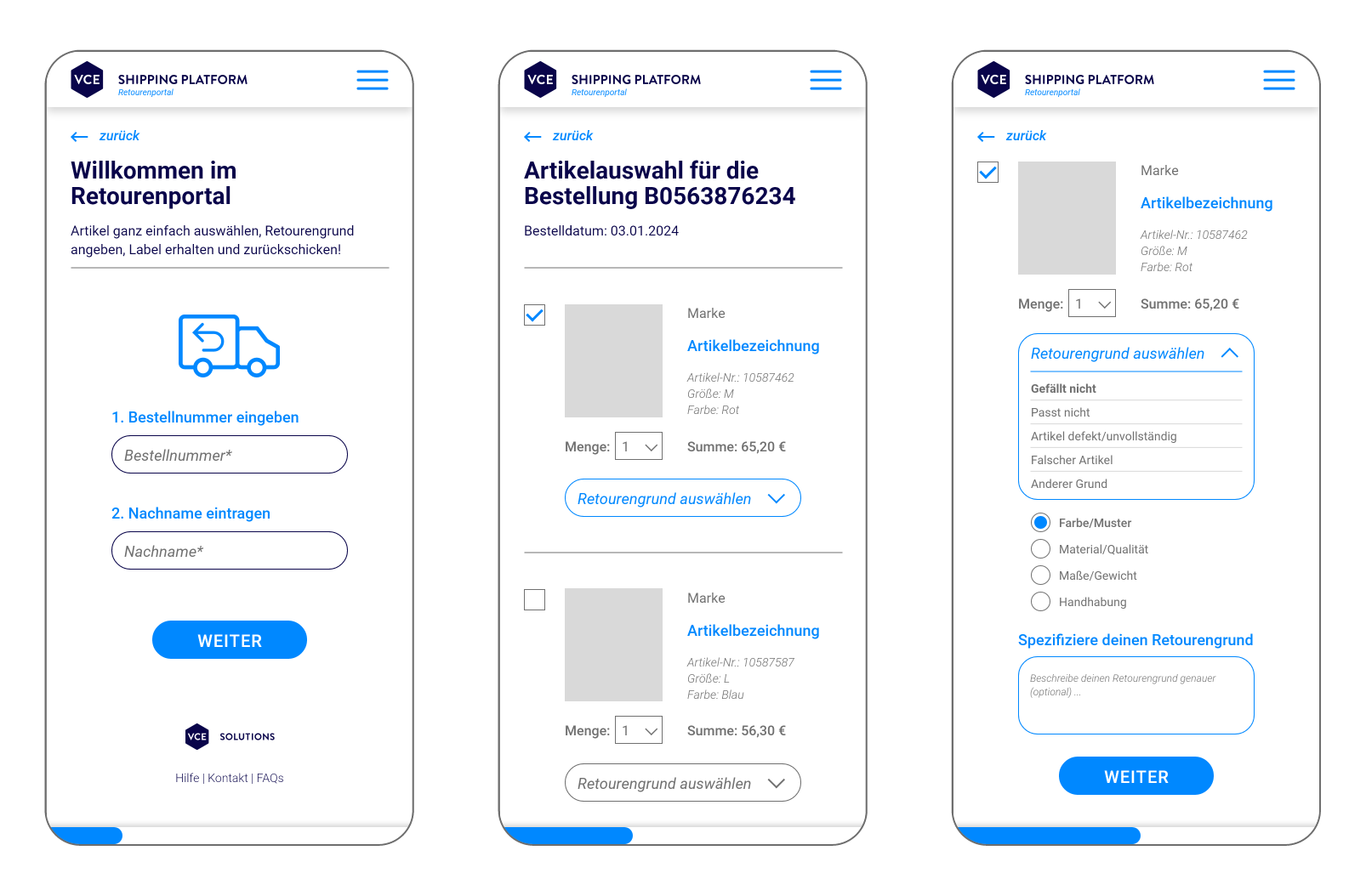
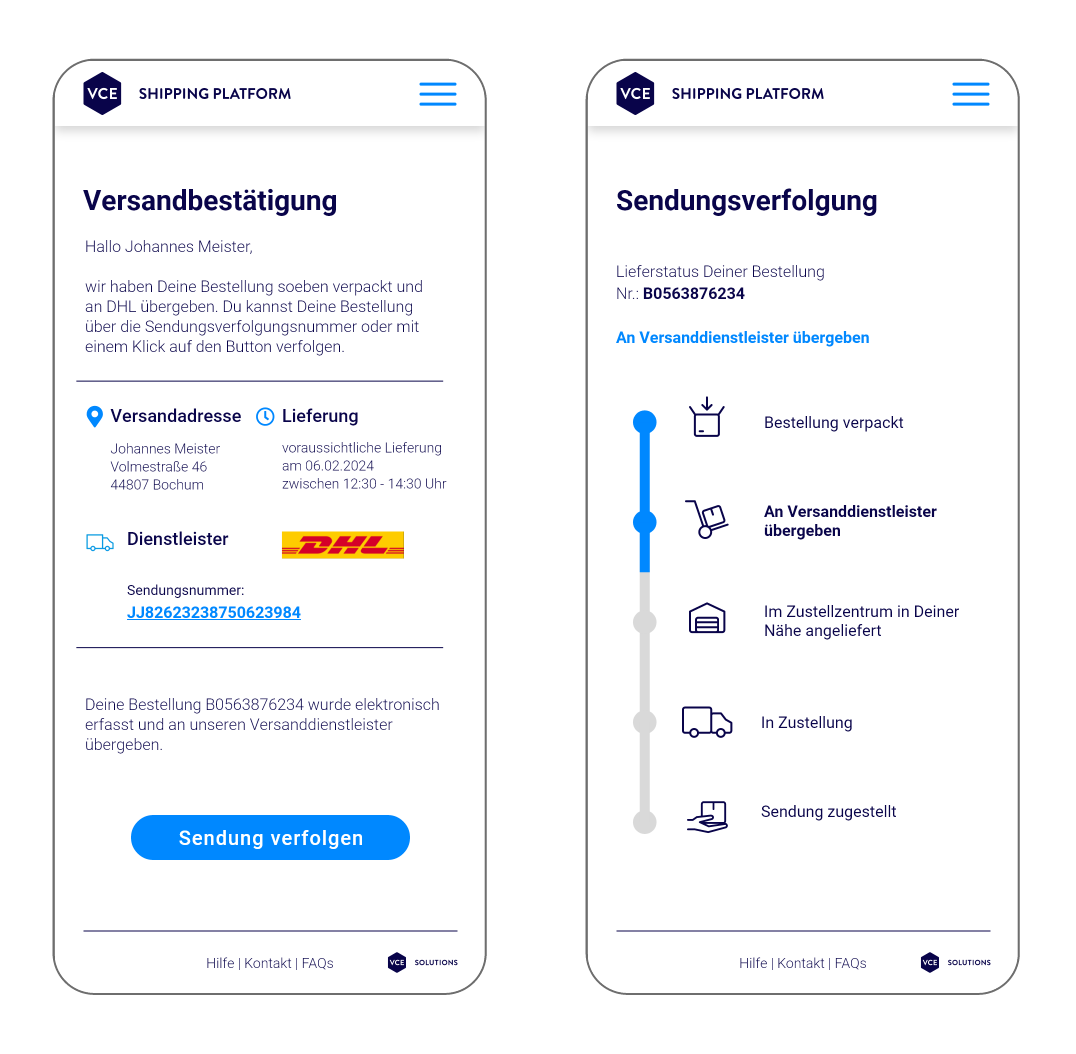
Return portals all necessary steps (here in the mobile view) to return goods
Which features should a self-service return portal bring?
So that you can benefit from a digital return management with your online shop, some important steps need to be considered. An optimal software covers the following phases of the return through its functions:
- Automatic notification in the system that one or more items are being returned, stating the reason for the return
- Information about the costs and refund as well as type of return (International post, customs regulations, deadlines) and self-defined rules of return
- Definition of shipping rules for an automated carrier (courier, express and parcel services) selection for the return
- Self-service system, which customers can use to create the shipping label themselves or drop it off via a QR code in a parcel shop
- Tracking of the return
- Data and information for the handover to connection of further processes like sending of replacement goods or refund of the purchase price
Ideally, neither your customers nor you have any questions or ambiguities during the
processing and it is completed as quickly as possible.
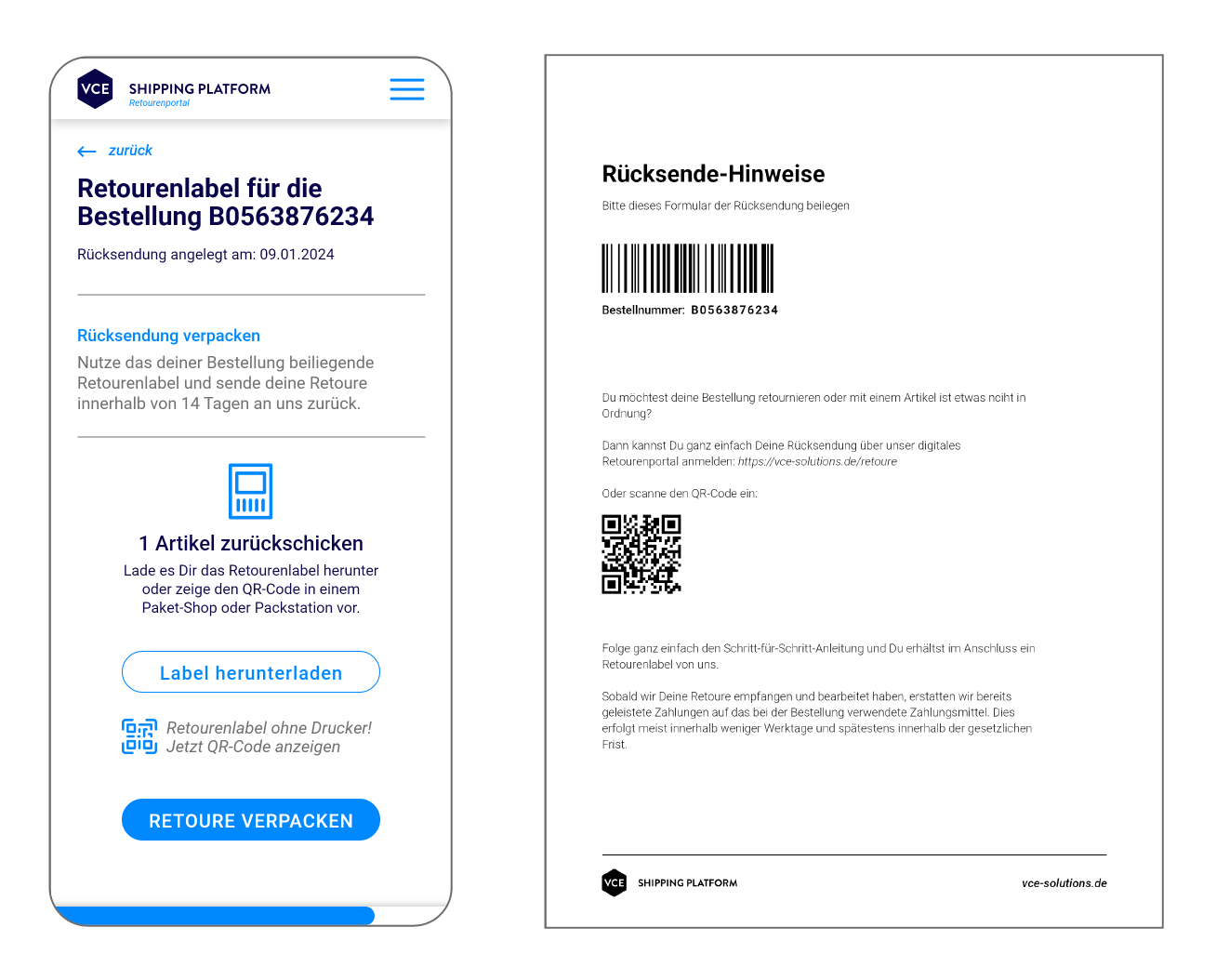
To be as customer-friendly as possible, the shipping label should be easily accessible
These advantages are offered by your own return portal
With the help of your own return portal, you can improve the customer journey of your online shop. Many customers buy on the platforms where a potential return works as smoothly as possible. Your own return portal offers the following advantages for your customers:
- Transparency about the reason for return: The communication of the reason and the announcement of the return can be automated by a return portal.
- Digitization: Through automatically created return labels, which are provided to your customers e.g. via e-mail or via a QR code, you can make sure that the goods come back correctly.
- Return tracking: All involved parties know exactly where the goods are at the moment and when they are expected to arrive. Also sending to another location and deviations in carrier selection can be possible.
- Multi-carrier management: You have control over the carriers for your returns through shipping rules, you enable your customers to choose and you make it easier for them with a PUDO-finder (Pick-up & Drop-off) to find a drop-off point.
- Information about freight conditions: Get an overview of all shipping costs that arise through returns of your items.
In addition, there are some advantages of your own return portal that do not directly increase customer service, but from which you can benefit financially or time-wise. Besides digitization, all data is safely and practically stored on a cloud. Also, you will find:
- Direct shop connections
- Carrier connections via Shipping platform
- Dashboards & reports (through tracking and evaluation)
- A central system for connecting further processes (re-availability, quality management, restocking, etc.)
- Cross-selling opportunities e.g. through placement of complementary goods in customer communication
In total, you can see that both sides benefit from a digital return management: The customers experience a better buying experience and tend to repeat or increase purchases, while your self-service return portal organizes, documents and tracks the returns in a time-saving and resource-saving way.
This is how you implement a return portal for your online shop
For a digital return management, the Shipping Platform by
VCE SOLUTIONS is suitable. This tool includes the digital return features and benefits that increase customer satisfaction in your online shop. With the Shipping Platform, you can not only process your returns automatically, but also digitally view, manage and automate all your shipments, so that the shipping and return process can run as efficiently and satisfactorily as possible.
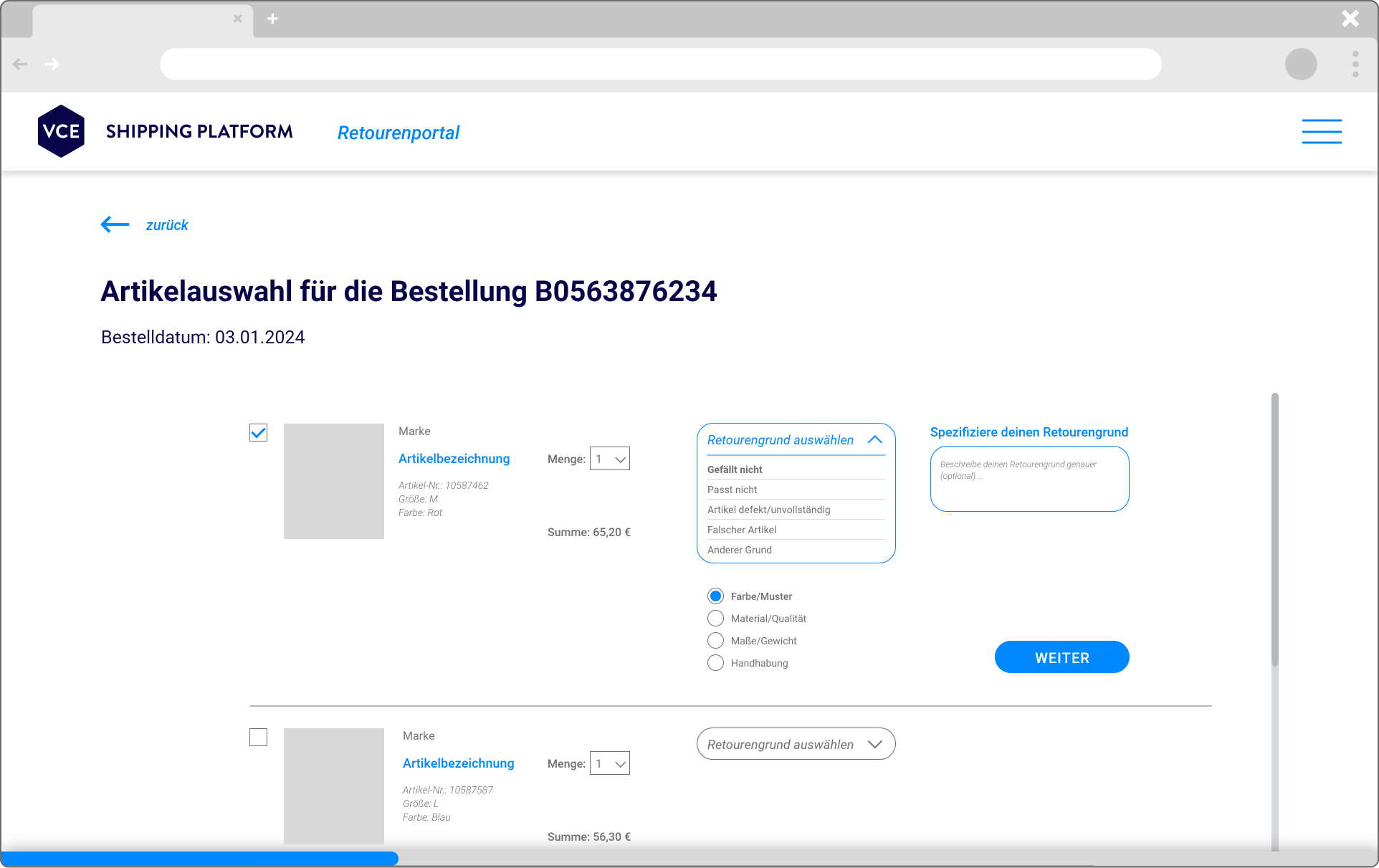
Customer view of the VCE return portal
Even if the return rate cannot be directly reduced, the Shipping Platform from VCE helps you with digital return management in implementing all necessary processes quickly, easily, efficiently and economically: from announcement and processing of the return to arrival of replacement. You retain control over resources, offer buyers the effortless return of products and ideally are able to resell them. According to the EHI study, 50-75% of all goods are offered again. VCE SOLUTIONS helps you exploit this potential with their Shipping Platform and the integrated return portal.
In addition, your brand can grow and you improve internal processes within your company. Employees spend less time with returns and complaints and have more capacity for stronger new purchases. Customer data can be evaluated through dashboards and this way you find weak points of your online shop or your assortment.
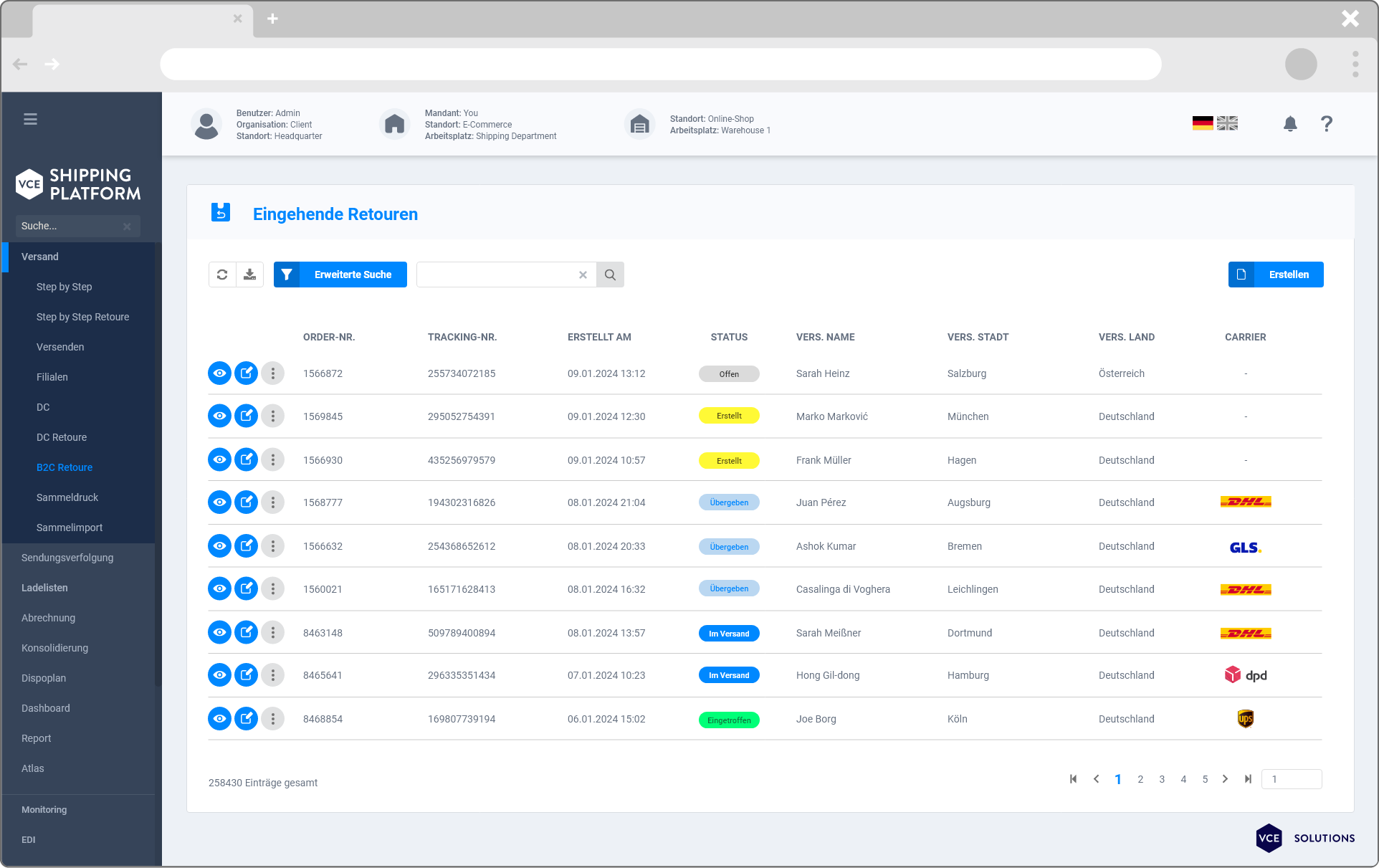
Dealer view of VCE about the incoming returns
The best way to
test the software from Germany directly and can get a first-hand impression of how it can be integrated into the customer journey of your target group.
Conclusion: Through the return portal of VCE you increase customer satisfaction and sales
To keep up with the logistic giants of e-commerce, you need to provide a functioning return. Otherwise, your online shop will have less success: If you do not offer a return, this can become an obstacle for many customers. If, however, you offer exchange options without a digital portal, you lose track of the conditions, status and the acceptance of the returns expenses.
To minimize the work you and your team have with the returns while still guaranteeing the expected customer satisfaction, you can use a self-service return portal like the one by
VCE SOLUTIONS. This way you have full control over return management and improve the internal processes of handling.
A good return management will quickly spread among your customers and you will see that many want to order from your online shop just because of the better buying experience. Not only during the most sales-heavy time, you avoid a return chaos and ensure happy customers and an efficient return management for your online shop.
