Table of contents
- What are Rich Snippets?
- Why are Rich Snippets important for SEO?
- On the one hand, Google recognizes the content, connections and relevance of websites to a specific search query quite well on its own thanks to
- Article (Article)
- Once you have chosen a function, you can implement it using one of the following three formats:
- Generate Rich Snippets via Tool
- Rich Snippets Testing Tool
- Tip 1: Access
- Fazit: Rich Snippets für deinen SEO-Erfolg
Who, if not Google, knows what time the movie starts again in the evening or what is the best recipe for vegan strawberry ice cream? Recipe cards, tables & Co. provide us with the answers to our questions directly in the search results list. When the results are visually enriched with such elements, experts refer to Rich Snippets. What you can understand in detail by Rich Snippets, how to use them and what impact they can have on your SEO success, you will find out here.
What are Rich Snippets?
Rich snippets are by definition richly presented results on search result pages (
SERP) of search engines like Google or Bing. Rich snippets contain additional elements besides meta title and description. They can include ratings, site links, pricing information or even questions. There are countless ways to enrich your search result. You can't possibly remember them all. But more on that later.
Why are Rich Snippets important for SEO?
Rich snippets are displayed when the search engine determines that users can more easily find what they are looking for. This means for you in reverse: If you optimize your content for rich snippets, it can not only bring SEO
advantages: The search result is more appealing
It's larger and takes up more space in the search result list
Increased chances of clicks on your website
Potentially more organic traffic
The likelihood of top positions in the SERP increases
Better brand building through placement in the Knowledge Graph
Your page can be displayed multiple times in different rich snippets
Where do Rich Snippets get their data from?
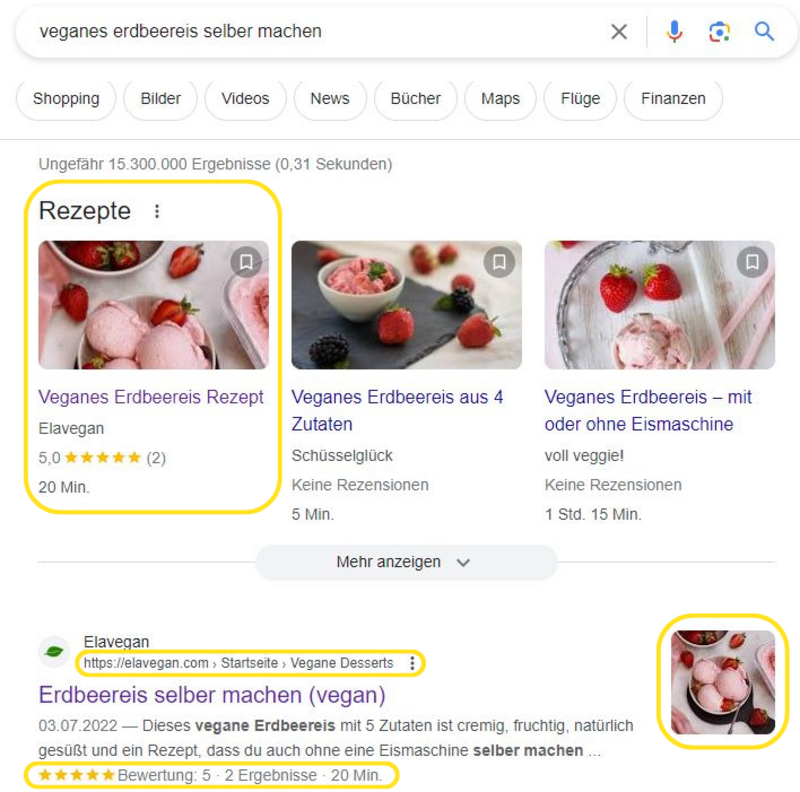
On the one hand, Google recognizes the content, connections and relevance of websites to a specific search query quite well on its own thanks to
Recommended SEO Tools
You can find more recommended tools SEO-Tools on OMR Reviews and compare them. In total, we have listed over 150 SEO tools (as of December 2023) that can help you increase your organic traffic in the long term. So take a look and compare the software with the help of the verified user reviews:
Article (Article)
Product (Product)
you will find a detailed guide for each extension, so that your site also appears as a rich snippet in the SERP.
Creating Rich Snippets: These formats form the basic structureBefore we start with the basics, please keep in mind that it always depends on the context: If you want to create rich snippets, the extension should also fit your respective website. Too much doesn't help here. It is better to label only a few elements, but completely and correctly.

JSON-LD (recommended)
Microdata
JavaScript
code. In general, Google recommends using JSON-LD for structured data. This is a newer, simpler and less error-prone schema format. Because it dispenses with the tags and properties that flood the HTML code in microdata or RDFa. Instead, it is integrated into a script element in the head or body.
MicrodataMicrodata is the oldest available schema format and is no longer recommended by Google. Here, tags are assigned that help search engines better understand content.
RDFa
The acronym RDFa stands for Resouce Distribution Framework in Attributes. The properties of the format are embedded in HTML5, XHTML or XML formats so that Google can extract them and present them in the form of rich snippets.
Ways to create structured data
You can create structured data manually or use numerous schema generators. A selection of useful tools can be found here.
If you want to create Rich Snippets without any coding skills, a Rich Snippets Generator Tool is recommended. There are many online tools that generate structured data for you.
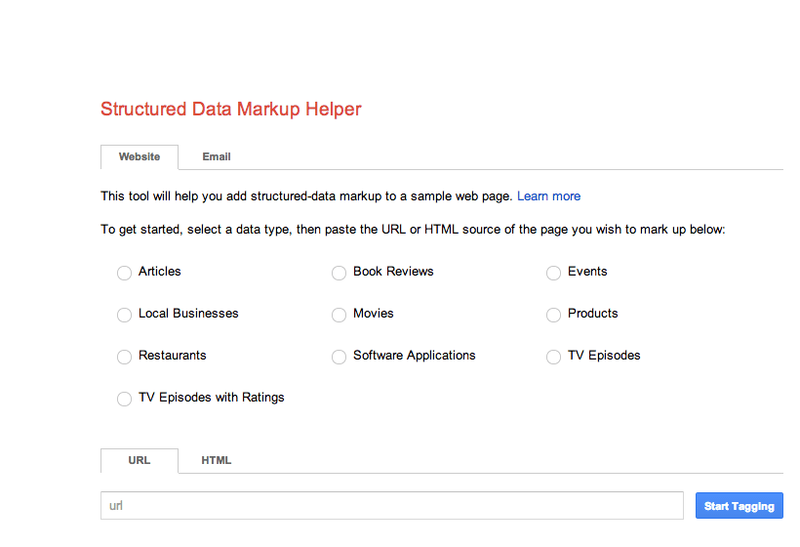
Google Structured Data Markup Helper
Structured data in 3, 2, 1: The
Google Structured Data Markup Helper
is probably the easiest free schema generator. You just need to enter your URL, tag the suggested fields and you will get the HTML code, which you can export as either microdata or JSON-LD format.
Source: Google Structured Data Markup Helper
Schema generator by Merkle
has an equally easy-to-use interface. Select your desired function, e.g. Article, Event or BreadcrumbList, add the details and then copy the generated code into the HTML of your website.
Schema Pro PluginFor Wordpress
If you use Wordpress, you should know the Rich Snippets Plugin Schema Pro
. With it, you can create structured data in just a few clicks. It's also a great complement to the popular SEO plugin
. With a few simple settings, you decide which plugin controls which function and get the most out of your SEO performance.Adding the Schema Markup Manually
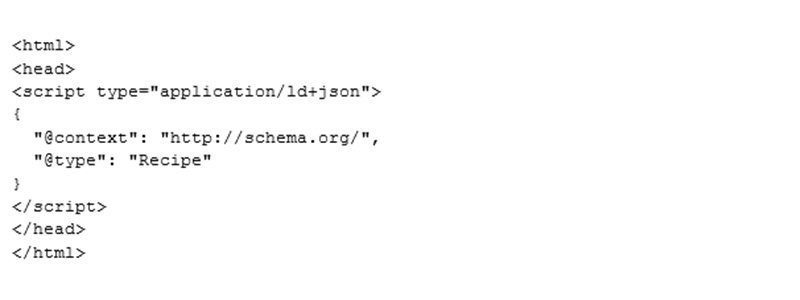
YoastOf course, you can also add the structured data yourself. This way, you can go into more detail than is possible with tools and implement everything exactly according to your ideas. To get started, you need to first embed JSON-LD in a script element in the head or body of your HTML code. Then assign the context and the type of structured data. Sticking with our example, that's the function "Recipe":
If you add more elements, they are separated by a comma. If you have little or no HTML knowledge, you should not add structured data manually for the first time. Because you could destroy your HTML page with it. Instead, use one of the generators presented.
If you want to mark additional pages with the schema markup in the long run, you can practice with the
Google Codelab for structured data
. After the course and with some patience, you should feel more confident to implement structured data yourself.
How can Rich Snippets be tested?There are various ways and tools to check the completeness and performance of rich snippets. Here are some examples:
With the
Rich Snippets Testing Tool
you can check whether all rich snippets have been recorded and whether the technical guidelines have been followed. You can also preview the search results.
Schema Markup Validator The
Schema Markup Validator
can validate a provided markup or extract structured data. For this, you either enter a URL or a code snippet.
Google Search ConsoleAlternatively, the
URL Testing Tool
analyzes data on the performance of your rich snippets, such as the analysis of the click-through rate or the number of sessions on your website.
SEO Tools
Tip 1: Access
Do not block the pages you label with structured data with
robots.txt
, noindex or other methods that exclude Googlebot from crawling or pages from indexing.
Tip 2: RelevanceMake sure that your markup is also relevant for the content of your website. If it's about instructions on how to tie a tie, you shouldn't label it as a "Recipe".
Tip 3: Completeness
Depending on which elements are added, you need additional elements for them to work flawlessly. If you add "VideoObject", for example, you also need to add "contentUrl".
Tip 4: Guidelines
Read through all of Google's guidelines, both the quality of pages and specifically the
Guidelines for structured data
. Check if your content meets the requirements.
Tip 5: SitemapTo keep Google always informed about future changes, you should submit a sitemap with all indexable URLs via the Google Search Console. You can automate this with the
Search Console Sitemap API
.
Tip 6: RankingsA good prerequisite for rich snippets is that your website already ranks well - ideally in the top 10. The worse your site is positioned in the SERP, the lower the likelihood that Google will display your search result as a rich snippet. Even if the structured data is integrated flawlessly.
Conclusion: Rich Snippets for your SEO success
If you know that Google better understands the content of your website with the help of structured data, that's enough. Don't worry if you're not familiar with the markups - that's what useful tools are for. If you take the time now to optimize your content for rich snippets, you will see real results in the long term.
Fazit: Rich Snippets für deinen SEO-Erfolg
Wenn du weißt, dass du Google die Inhalte deiner Webseite mithilfe von strukturierten Daten besser versteht, reicht das vollkommen aus. Mache dir keinen Kopf, wenn du mit den Markups nicht vertraut bist – denn genau dafür gibt es nützliche Tools. Nimmst du dir jetzt die Zeit, deinen Content für Rich Snippets zu optimieren, wirst du auf langfristige Sicht echte Ergebnisse sehen.


